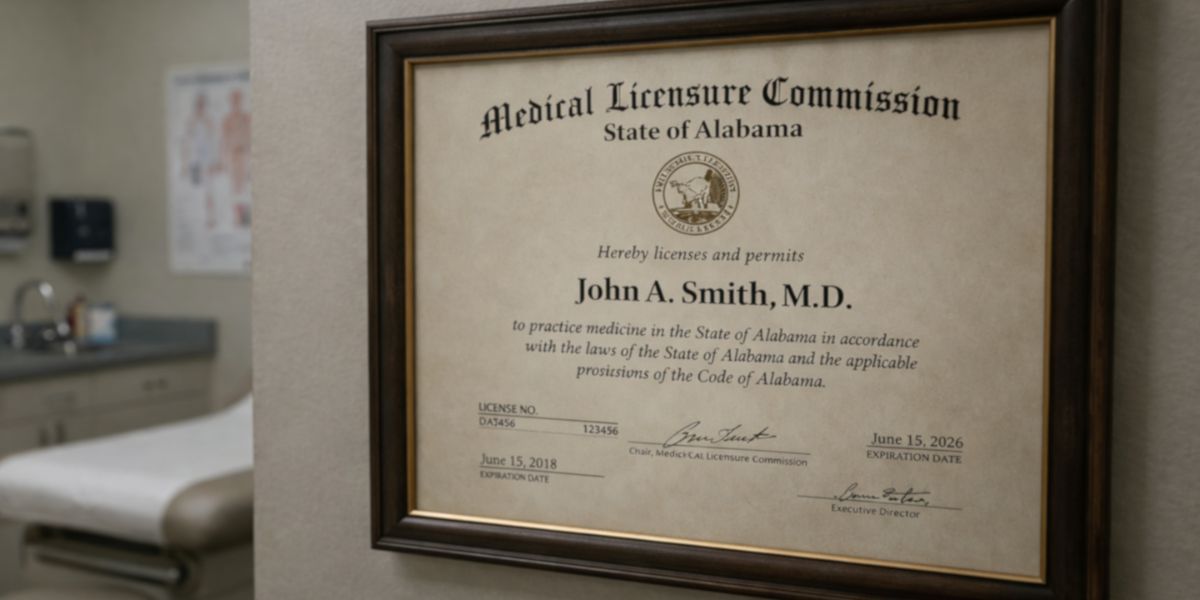
When you visit a doctor, you might notice the framed medical license on the wall. For most patients, that document is simply reassurance that their physician is qualified to practice medicine.
What many people don’t realize is that behind every one of those licenses is a system designed to protect patients – a system that works largely out of public view but is essential to maintaining trust in our healthcare system.
In Alabama, that responsibility belongs to the Alabama Board of Medical Examiners.
Many patients have never heard of the Board, but its work affects every person who seeks medical care in our state. The Board exists for one simple reason: to protect patients by ensuring that those who practice medicine in Alabama meet high standards of competence, professionalism and ethical conduct.
As a physician who has practiced obstetrics and gynecology for more than 30 years and as Chair of the Board of Medical Examiners, I understand how important this work is for patients and the integrity of the medical profession.
Before a physician can practice medicine in Alabama, they must first meet strict licensing requirements. The Board reviews education, training, examination results and professional history before granting a license. This careful review helps ensure that physicians entering practice are properly trained and qualified.
But oversight does not stop once a license is issued.
Medicine is constantly evolving. New technologies such as telemedicine are expanding access to care. At the same time, Alabama faces challenges related to physician workforce shortages and increasing demand for services.
In this environment, it is more important than ever to maintain strong professional standards and public trust. The Board plays a key role in that effort by establishing rules governing the practice of medicine and ensuring physicians remain in compliance with those standards.
Physicians must report certain events to the Board, including significant malpractice settlements and disciplinary actions taken by hospitals. These reporting requirements allow the Board to identify potential concerns early and intervene when necessary to protect patients.
Another important part of the Board’s work involves responding to complaints.
Anyone who has concerns about a physician’s conduct or care can file a complaint with the Board. Complaints may come from patients, family members, healthcare colleagues or hospitals. When a complaint is received, investigators review the allegations, gather records, interview witnesses and determine whether there is evidence of a violation of professional standards.
This process is thorough and deliberate because patient safety comes first. At the same time, the Board ensures that physicians are afforded a fair and impartial review of any allegations.
If an investigation finds that a physician has engaged in unprofessional conduct, impairment, gross negligence or other violations, the Board has the authority to take disciplinary action. Sanctions can range from reprimands or required continuing education to license suspension or revocation, depending on the seriousness of the issue.
In some situations, remediation or monitoring may allow a physician to correct deficiencies while continuing to safely care for patients. The goal is always the same: protecting patients by maintaining a strong and accountable medical profession.
Transparency is also central to the Board’s mission. Disciplinary actions are made public and can be viewed through the Board’s website, where patients can also verify a physician’s credentials or file a complaint if they have concerns.
Patients place tremendous trust in their doctors – often during some of the most vulnerable moments of their lives. Protecting that trust is the reason the Board exists.
Dr. Rogers earned his Doctor of Medicine degree from the University of Alabama School of Medicine. He has provided obstetric and gynecologic care to patients for more than 30 years. Prior to his service as a physician, he was commissioned into the United States Marine Corps and became a fighter pilot, flying F/A-18 Hornet Strike Fighters.