An Alabama-founded nonprofit has taken its first step from mission to action.
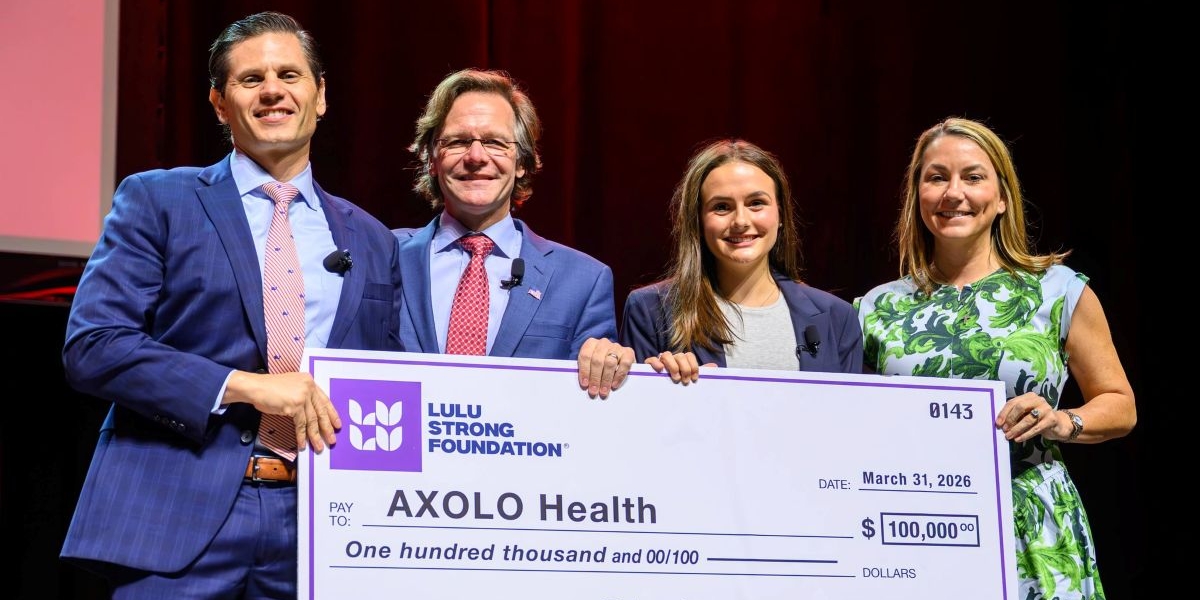
The Lulu Strong Foundation has awarded its first-ever grant, directing $100,000 to Axolo Health to support the development of virtual reality-based rehabilitation therapy for amputees.
During her appearance at the Helen Keller Lecture Series at Troy University, Lulu Gribbin presented the foundation’s first grant—a moment highlighted in a post shared by the school.
Founded by Lulu Gribbin, the organization aims to expand access to advanced prosthetic technologies and therapies that help restore independence and quality of life for individuals living with limb loss.
The funding will support Axolo Health’s Targeted Brain Rehabilitation (TBR) program, a virtual reality-based therapy designed to treat phantom limb pain by retraining neural pathways following amputation.
The company’s upper-limb version of the therapy is already FDA-registered and commercially available, while the new funding will help expand development for lower-limb applications.
“Axolo Health and the team at OrthoCarolina have changed what recovery can look like for amputees everywhere,” Gribbin said. “Being able to support their work through our foundation’s first-ever grant feels like a true full circle moment.”
Axolo Health was co-founded by Dr. Glenn Gaston and Dr. Bryan Loeffler of OrthoCarolina’s Reconstructive Center for Lost Limbs. The physicians previously treated Gribbin following a 2024 shark attack that resulted in the loss of her left hand and part of her right leg.
“We are honored to be the recipients of the first-ever grant from the Lulu Strong Foundation,” Gaston said. “This support will keep our research moving forward to expand access to life-changing treatment to any and all amputee patients.”
The foundation said the grant reflects its broader goal of addressing a longstanding challenge in amputee care—limited access to advanced rehabilitation tools due to cost and availability.
“They are doing exactly the kind of work we exist to support by making breakthrough technology accessible to every amputee who needs it,” Gribbin said.
Gribbin has credited the TBR therapy with significantly reducing her own phantom limb pain and said expanding access to similar treatment is a key focus of the foundation’s work.
Established just months ago, the Lulu Strong Foundation is focused on accelerating the development and accessibility of innovative solutions, including AI-powered prosthetics and immersive rehabilitation
Sherri Blevins is a staff writer for Yellowhammer News. You may contact her at [email protected].