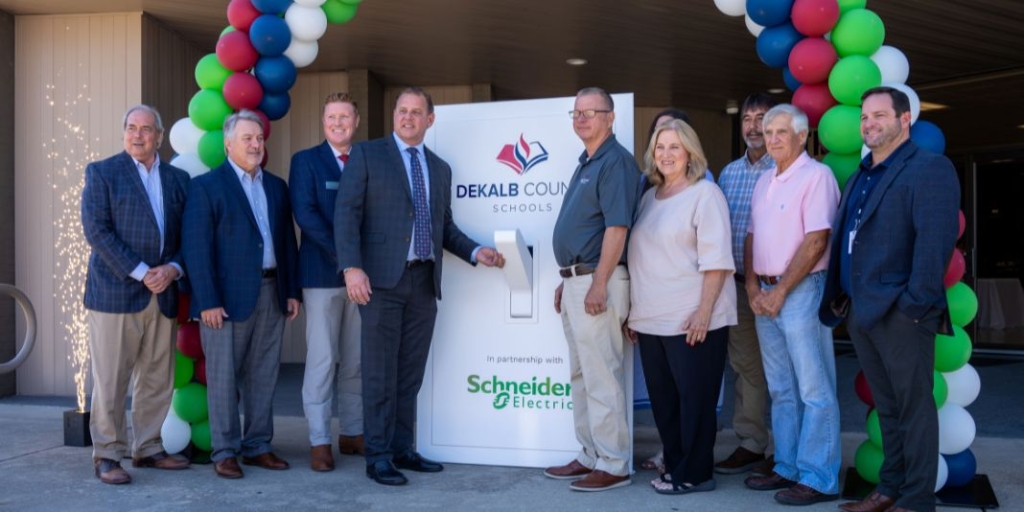
Standing inside the 54-year-old DeKalb County Career Tech Center where generations of students have learned skilled trades, Alabama House Speaker Nathaniel Ledbetter reflected Friday on how far the state has come—and how much further it hopes to go.
For Ledbetter, a Rainsville native, the unveiling of renderings for the new DeKalb County Career Tech and Fine Arts Center represented more than a construction project. It also served as the launch of the statewide Alabama Career Pathways Program, an initiative designed to connect students with training for high-demand careers and ensure every student has access to the same opportunities, regardless of where they live.
“You know, it’s certainly special for me to be in my hometown and announce a statewide program,” Ledbetter said. “How cool is that? That a kid from Rainsville, Alabama gets a chance to stand up and tell you about projects that have a statewide impact from South Alabama to North Alabama.”
Ledbetter said the effort grew out of conversations with State Superintendent Eric Mackey and local educators about expanding opportunities for students whose futures may not include a traditional four-year college degree.
Ledbetter emphasized that only about 36% of Alabama students graduate from college, saying the remaining students need opportunities to learn a skilled trade and enter the workforce through career and technical education.
He said Alabama’s rapid economic growth has only increased the need for skilled workers.
Over the past several years, the state has attracted billions of dollars in economic development projects, including major investments in North Alabama. Those projects, he said, are creating demand for electricians, welders, nurses, mechanics, construction workers and other skilled professionals.
“You know, I’ve used the term several times,” Ledbetter said. “… If you become a plumber or an electrician in DeKalb County, you can make more money than a lawyer. If you don’t believe me, go hire one today and see. I really believe that.”
Rather than designing a workforce program from Montgomery, Ledbetter said lawmakers first turned to the people who would ultimately hire those students.
“We want to know what you need,” he said, describing meetings with approximately 40 industries from across Alabama.
Those conversations helped shape the Alabama Career Pathways Program, which includes a centralized website allowing students to explore career fields, locate training opportunities, learn education requirements and see potential salaries before choosing a path.
The program is backed by a $250 million state investment in new and expanded Career Tech facilities, with local communities contributing matching funds and industry partners providing additional support.
Ledbetter said the initiative also reflects a broader shift in how Alabama approaches workforce development.
“We can’t do it the same way because that’s how we’ve always done it,” he said. “It’s a new day. It’s a new state.”
State Superintendent of Education Dr. Eric Mackey, who spoke earlier in the program, said Alabama currently has 10 Career Tech centers in some stage of development, about 10 more expected to begin within the next 12 months and another two or three in the planning stages.
He added that the statewide effort is expected to include 25 new centers over the next 36 months. Mackey said the goal is to ensure families no longer have to move to another community for students to access high-quality career and technical education.
“Every kid in this state deserves the same opportunity as the kids in Birmingham, Mobile, and Tuscaloosa,” Ledbetter said.
Former DeKalb County Career Tech student Nick Sapp offered a firsthand example of the program’s impact. Sapp told those gathered he enrolled at the DeKalb County Career Tech Center in 2006 and credited its instructors and administrators with preparing him to enter the workforce immediately after high school.
He later completed an advanced apprenticeship program and competed in national competitions before becoming a construction company owner. Today, Sapp said he sees firsthand the shortage of skilled labor and believes the new Career Tech Center will give future students the same opportunities that helped launch his own career.
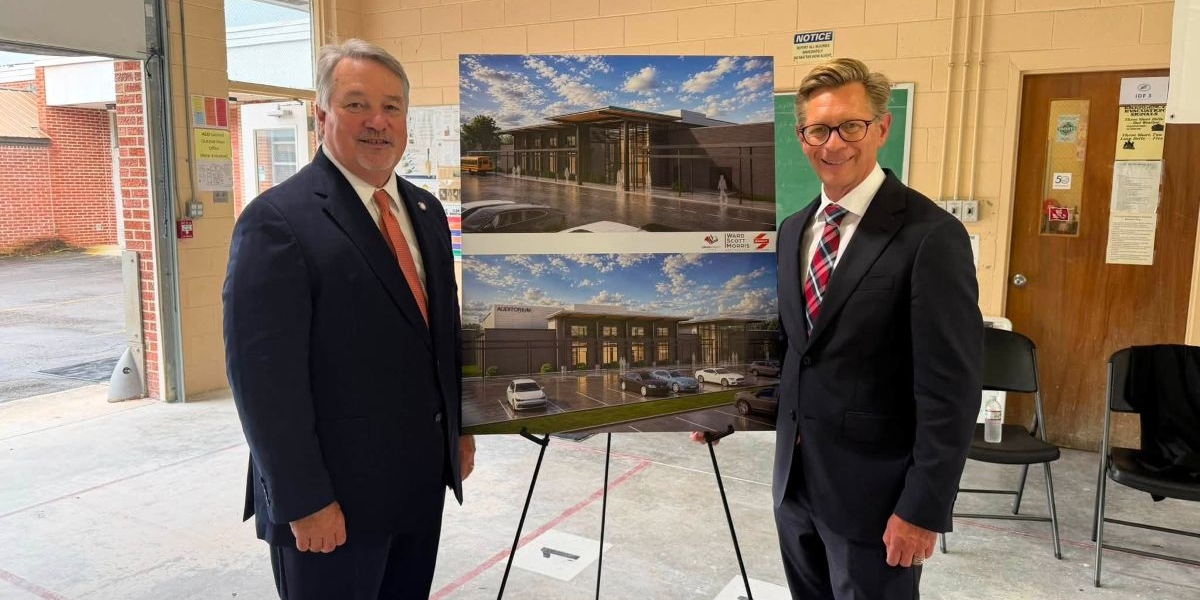
Friday’s event also marked the unveiling of renderings for DeKalb County’s new Career Tech and Fine Arts Center.
The new campus will be built on a 42-acre site near the DeKalb County 9-1-1 Center in the county industrial park. Plans call for a 125,000-square-foot facility that will include expanded career technical education space, a Fine Arts Center with a 1,000-seat auditorium and room for future program growth.
Superintendent Wayne Lyles said the current Career Tech Center has served students well for more than five decades but has outgrown its space. While originally designed to serve about 400 students, the center has enrolled more than 830 students annually in recent years through its partnership with Fort Payne City Schools.
“We’re extremely excited about the opportunities the state-of-the-art facility is going to create for our residents and our students in DeKalb County,” Lyles said.
He explained that the new center will better prepare students for today’s workforce while helping employers find the skilled workers they need.
“We want this to prepare a better-trained workforce and better-paying jobs for our district, and we want our workforce prepared for the 21st century,” Lyles said.
The project is expected to cost between $40 million and $45 million. Lyles said bids are anticipated in October, with construction expected to begin soon afterward.
As officials gathered to unveil the renderings, Ledbetter said the project represents more than bricks and mortar.
For him, it is about ensuring that future generations of Alabama students—whether they choose college, technical training or the skilled trades—have the opportunity to succeed close to home.
Sherri Blevins is a staff writer for Yellowhammer News. You may contact her at [email protected].