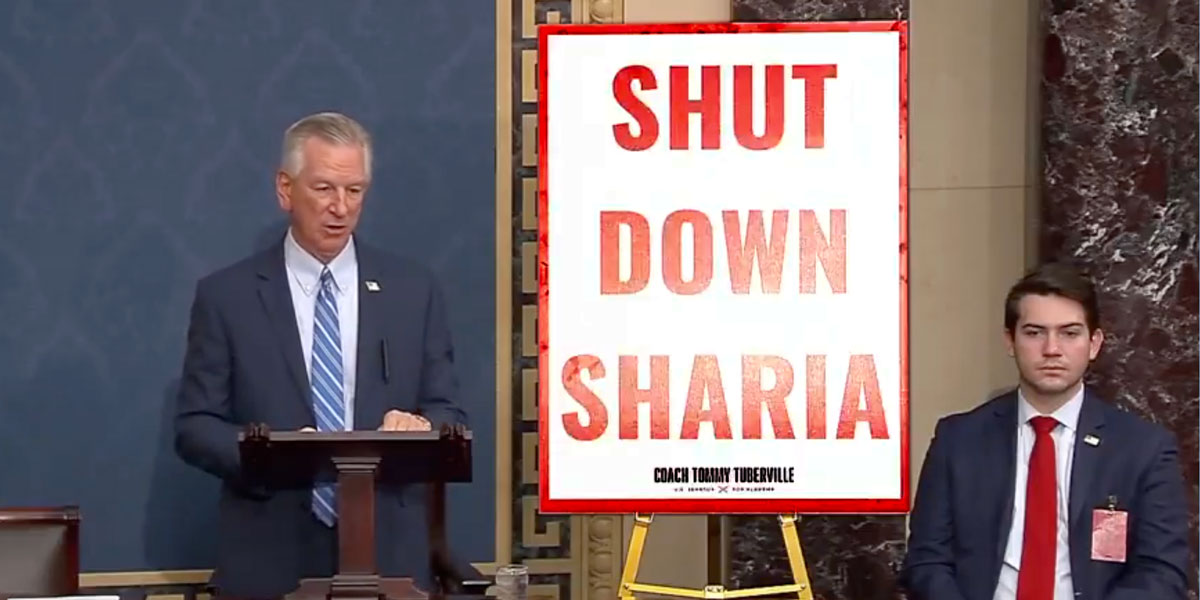
I am tired of turning on the television or scrolling through social media and seeing carefully clipped soundbites of Senator Tommy Tuberville held up as proof that he is somehow the bad guy of the week.
These out-of-context clips may stir up applause on national cable news, but they do not reflect reality on the ground in Alabama.
Folks here understand exactly what Tuberville is doing. He is not attacking people. He is standing up for principles. And in a time when too many politicians duck hard conversations, that kind of firmness looks a lot like leadership.
America has always welcomed newcomers, but it has never survived on welcome alone.
This country works because people share expectations about law, community, and responsibility. That did not happen by accident.
It happened because those who came here understood that becoming American meant more than just crossing a border. It meant learning the language, respecting the law, and joining the civic life of the nation. When that balance holds, communities grow stronger.
When leaders refuse to uphold it, division follows. Alabama is right to insist that the balance still matters.
The recent decision by a city council to deny a proposed Islamic school bid has been twisted into something it is not. City councils across this state make zoning and land-use decisions every day based on traffic concerns, infrastructure capacity, financial transparency, and neighborhood impact.
That is the job. Turning a routine governance decision into a national religious controversy ignores how local government actually works and pressures officials to abandon common sense in favor of headlines. Alabama’s cities exist to serve their residents, not activist storytelling.
At the state level, Senator Tuberville has taken a clear and steady stance in defense of Alabama’s legal framework and cultural foundation. Predictably, that has unsettled critics who care more about national approval than local accountability. Politicians have forgotten that leadership has never meant pleasing everyone.
Down here, leadership means saying what needs to be said and standing your ground when it counts. Tuberville is doing exactly that.
Trouble arises when any group, religious or otherwise, pushes for special treatment or separate standards within public life. When ideology starts pushing against shared law, elected officials have a duty to intervene.
Saying no in those moments is not discrimination. It is fairness. The same rules must apply to everyone if communities are going to function.
We do not have to look far to see what happens when leaders avoid these conversations.
Dearborn, Michigan has repeatedly found itself in the national spotlight due to civic tensions that grew out of unresolved conflicts between free speech, public education standards, and religious sensitivities.
These issues did not appear overnight, and they did not come from bad intentions. They came from leaders hesitating to draw clear lines early on. The result has been lawsuits, division, and a loss of public trust. That is not a path Alabama should follow.
Assimilation has always been the glue that held America together.
People who made good lives here did so by embracing the country as it was, not by demanding it bend to match where they came from. They understood that citizenship carries responsibility as well as rights. When it fades, nothing good fills the space.
John Adams put it plainly when he warned that “Our Constitution was made only for a moral and religious people. It is wholly inadequate to the government of any other.” Adams was not arguing for enforced belief.
He was pointing out that self-government depends on shared moral guardrails and respect for law.
Senator Tuberville’s position reflects that same understanding. He is not telling anyone how to worship. He is reminding us that public life must rest on common ground.
These days, tolerance gets praised more than clarity. But tolerance without limits turns into neglect.
A society unwilling to say what it stands for will eventually find itself standing for nothing at all.
Setting boundaries is not hateful. It is necessary. Alabama should not apologize for preserving its values or for trusting local leaders to make decisions based on real-world impact.
Too often, critics who have never set foot in these communities rush to judge.
They will not be here to answer questions or live with the consequences. Our elected officials will. Senator Tuberville understands that responsibility, and he has chosen to shoulder it.
Alabama’s roots matter. Its culture matters. Its future depends on leaders like Senator, and soon-to-be Governor of Alabama, Tommy Tuberville who are willing to protect both with steady hands and clear eyes.
Alabama remains a place people want to be part of because it stands for something solid and recognizable. Strong leadership is not exclusion. It is stewardship, and Alabama is stronger for it.
Laura Johnston Clark is a wife, mother, and businesswoman. She grew up in the Wiregrass and now lives in Birmingham with her husband, retired Air Force Colonel David Etheredge. She is a member of the Alabama Republican Party.