When the United States took control of Venezuela, it sent a shockwave across the world. Ordinary Iranians, already living under a repressive dictatorship, saw that even longstanding regimes could be challenged and toppled.
This sparked courage and defiance among the people, inspiring them to rise up and demand their own freedom. The message was clear: no leader is untouchable, and the fight for liberty is worth the risk.
“To the brave, long-suffering people of Iran: I’ve stood with you … and my government will continue to stand with you,” Trump declared.
These words send a clear and unwavering message: the United States is on the side of those fighting for freedom. In a country where the regime has shut down the internet for days, staying connected is not just convenient — it’s vital.
Elon Musk’s Starlink could provide a critical lifeline for Iranians, giving them the ability to communicate, organize, and stay informed even as their own government tries to silence them.
It demonstrates that the world’s greatest superpower, America, is watching, aware, and fully behind their struggle for freedom. The message is clear: they are not alone, and the United States stands unwavering in its support for their fight for liberty.
Why is this so significant?
For more than forty years, the United States and Iran have been locked in a conflict that began in 1979. That year marked a turning point in modern history.
Iran’s revolution overthrew its government and replaced it with a radical religious regime that openly declared hostility toward the West.
American diplomats were taken hostage and held for more than a year. Iranian crowds filled the streets chanting “Death to America,” and those words were not symbolic. They reflected official policy, justified violence, and set the stage for decades of terror.
Those of us who lived through that era remember it clearly. We watched the hostage crisis unfold day after day on television. We saw Iranian leaders celebrate American weakness and suffering.
We lived through years when hijackings, embassy bombings, and attacks on civilians became part of the global news cycle. Iran did not simply oppress its own people. It exported fear and instability across the world.
Gen Z did not live through those years. They did not hear crowds chanting “Death to America” as a rallying cry. They did not grow up watching Iran fund terror groups and destabilize entire regions.
They learned about these events through textbooks and social media summaries, stripped of emotion and consequence. That distance matters, but it is not entirely their fault.
Social media has sped everything up, and not in a good way. Young people are bombarded with catchy slogans, one-sided versions of history, and a mess of moral confusion.
Patriotism is made fun of, borders are dismissed, and police are painted as the enemy. Acts of terrorism are excused as “resistance,” and when lies are repeated enough, they start to feel like truth.
The generational divide is glaring when it comes to September 11. Many young voters were too young — or not even born — to remember that day. They didn’t watch in real time as planes tore into the Twin Towers, didn’t see smoke choking the skyline, or witness heroes running straight into death.
Those of us who lived it carry those memories burned into our minds forever. We understand this truth: radical ideology isn’t a theory or a debate — it kills.
And the threats we face today, both at home and abroad, are born from the same deadly ideas. We cannot afford to forget, or to underestimate them.
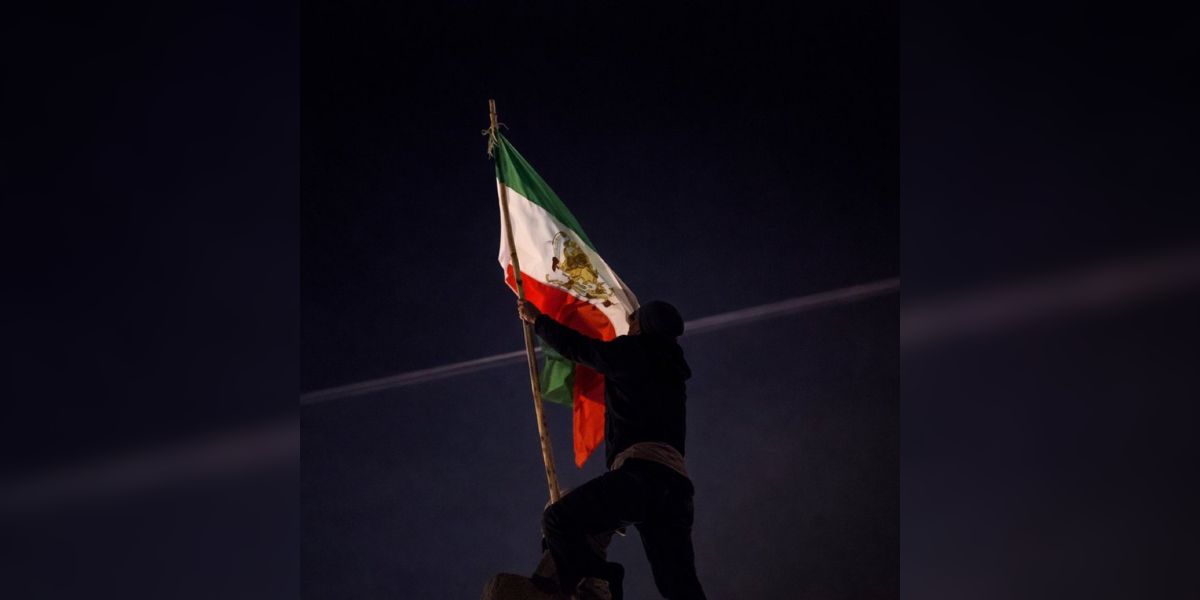
Now Iran is reaching a breaking point. Its people are rising up against a regime that has ruled through fear, crushed women, silenced dissent, and destroyed its economy.
These are not protests over minor policy disputes. This is a population demanding freedom. The government’s response has been arrests, bullets, and internet blackouts, because repression is the only language it knows.
Here is the bitter irony of this moment. While Iranians are risking their lives to overthrow radical Islamic rule, radical left activists in the United States are protesting to weaken borders and excuse the very ideology Iranians are fighting to escape.
In America, extremism is romanticized as misunderstood. In Iran, it is feared because it has ruled with brutality for decades.
While American radical left protesters chant slogans in safety, Iranian women burn headscarves in defiance and face prison or death. While radicals here demand tolerance for ideologies that reject Western values, Iranians are begging the world to recognize the damage those ideologies have done.
What is defended in the United States is being rejected in Iran by the people who know it best.
At the same time, figures tied to Iran’s past are re-emerging. Reza Pahlavi, the son of the last Shah, represents to many Iranians a vision of a nation that once engaged with the world instead of threatening it.
His rumored presence at Mar-a-Lago this weekend, alongside international leaders praying for Jerusalem, signals that serious conversations may be taking place as history begins to shift.
If Iran were to break free from its current rulers, the impact would be global. Terror networks would weaken. Regional conflicts could cool. Energy markets would stabilize. A nation once known as Persia could again become a force for culture, trade, and stability.
There will likely be protests in the United States that misunderstand Iran’s history and excuse its regime. But ignorance does not change reality. What is happening in Iran right now matters deeply.
All Americans should be praying for the people of Iran, for the safety of those risking everything for freedom, and for wisdom for leaders making decisions that could shape the course of history.
The world should be watching closely, because history is moving again, and it does not wait for those who fail to learn from the past.
Laura Johnston Clark is a wife, mother, and businesswoman. She grew up in the Wiregrass and now lives in Birmingham with her husband, retired Air Force Colonel David Etheredge. She is a member of the Alabama Republican Party.