As a physician, my calling has always been to care for people whose lives and bodies are entrusted to me. As a Christian, my faith and personal relationship with Jesus teaches me that responsibility does not end when a person is inconvenient, unpopular, or out of sight.
Scripture is clear on this point: Hebrews 13:3 instructs us to “continue to remember those in prison as if you were together with them in prison, and those who are mistreated as if you yourselves were suffering.” That is a clear and unwavering moral command, and as a State Senator, I take it seriously. When the State takes custody of a human being, it assumes a serious moral and legal responsibility.
Alabama’s prisons operate in our name. They are funded by taxpayers, governed by state authority, and entrusted with the lives of both incarcerated people and the officers who serve inside them. That reality demands more than good intentions. It requires clear lines of oversight, independent review, and the ability to identify and correct systemic failures before they become crises.
As Scripture tells us, “From everyone who has been given much, much will be demanded, and from the one who has been entrusted with much, much more will be asked (Luke 12:48).” The State is given much power by us, the taxpayer – it is high time we demand accountability in return.
For too long, oversight of our corrections system has been fragmented, informal, or housed too close to the very institutions it is meant to examine. That is not a criticism of individual employees; it is a recognition of a structural weakness. No system functions well when it is asked to police itself. Conservative governance has always understood this. Accountability protects institutions. It does not undermine them.
The legislation that I introduced, AL Senate Bill 316, is now under consideration in the State Senate. It takes a practical, measured step toward addressing this gap. If enacted, it would formalize and strengthen the existing oversight role within the Department of Examiners of Public Accounts, expand its capacity, and give it clear authority to inspect facilities, review conditions of confinement, assess staffing and safety, and report findings publicly.
It would create a Corrections Oversight Board to ensure transparency and public input. It would move criminal investigations out of the Department of Corrections and into the State Bureau of Investigation, where independence is essential to credibility. And it would restore the use of special prosecutors in jurisdictions with major prison facilities to ensure cases originating inside prisons receive proper attention.
None of this is radical. It is orderly, sensible, conservative, and – most importantly – it reflects an understanding that oversight is about prevention, not just punishment.
As a doctor, I know that untreated problems rarely resolve themselves. Instead, they get worse. In correctional settings, the consequences of neglect show up in many forms: unsafe housing conditions, staffing shortages, failures in medical care, breakdowns in discipline, and preventable harm to both inmates and officers. Even basic issues, such as whether food is prepared safely or facilities are properly maintained, become indicators of whether a system is functioning as it should. These are not isolated complaints; they are signals of whether governance is working.
My faith does not allow me to ignore these signals. It asks me instead to take responsibility for the conditions created under our authority.
These demands for reform are also a matter of respect for correctional officers. Men and women who work in our prisons deserve safe workplaces, adequate staffing, and systems that respond when problems arise. Independent oversight protects them as much as anyone else. When failures are hidden or ignored, the burden falls first on those who show up every day to do demanding work under difficult circumstances.
Strong oversight also protects taxpayers. Alabama has paid a steep price in litigation, federal scrutiny, and emergency interventions when problems were allowed to fester. Transparent inspection, public reporting, and clear investigative authority are far less costly than crisis management after the fact.
Faith, good governance, and common sense point in the same direction. Power must be matched with responsibility, authority must be checked by accountability, and state institutions entrusted with human lives must be willing to be examined honestly.
This legislation does not solve every challenge facing Alabama’s prison system. But it establishes the structure needed to address those challenges responsibly. It strengthens oversight without weakening security. It formalizes roles that already exist while ensuring independence. And it signals that Alabama takes its responsibilities seriously.
Remembering those in prison does not mean lowering standards; it means upholding them. As Alabamians, as taxpayers, and as Christians, we should expect no less from the systems that operate in our name.
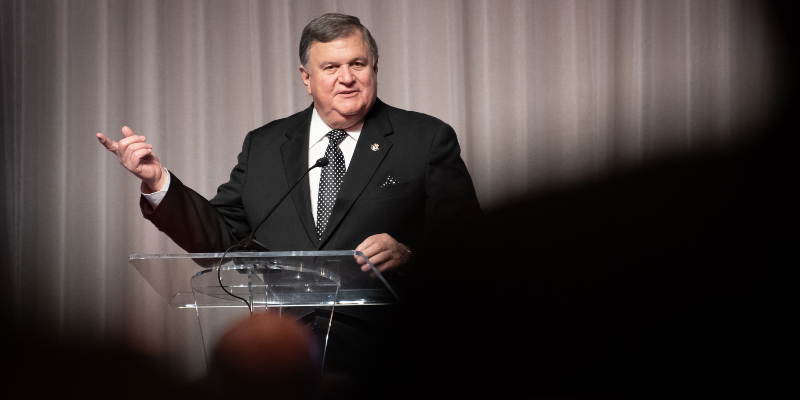
Larry Stutts is the Republican State Senator of District 6 in Alabama.