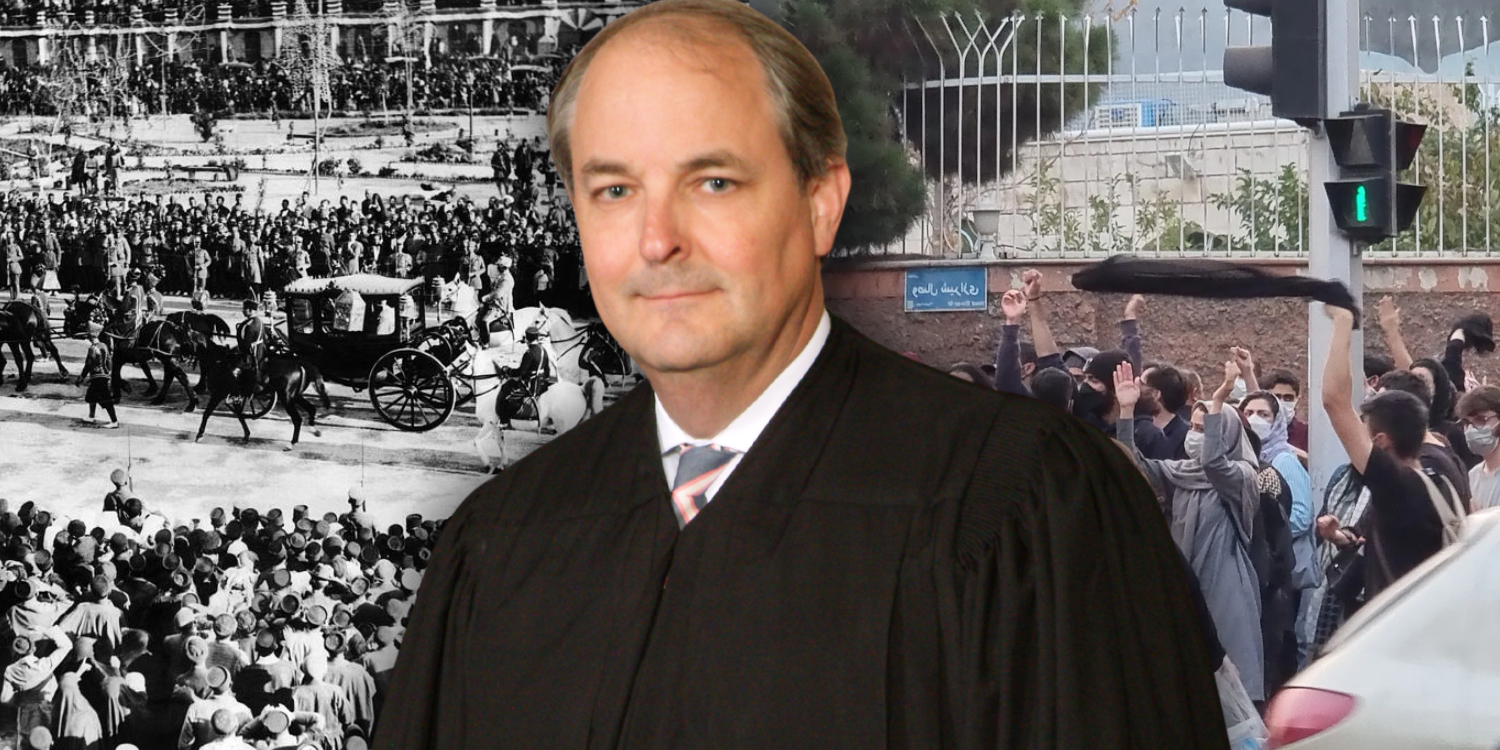
One hundred years ago, in April of 1926, Reza Khan Pahlavi was crowned Shah of Iran. His coronation marked one of the most significant turning points in the country’s modern history.
It symbolized far more than a change of monarch: it represented the end of the declining Qajar dynasty, the birth of the Pahlavi regime, and the beginning of a sweeping program of modernization and centralization that would fundamentally reshape Iran.
The centenary of Reza Pahlavi’s coronation reaches beyond a mere historical milestone and provides us a lens to examine Iran’s present.
As the country continues to grapple with internal unrest, questions of legitimacy, and tensions between authority and popular will, the rise of Reza Pahlavi offers a revealing parallel, a moment when order was restored, but at a cost that still echoes today.
Reza Pahlavi did not emerge as Iran’s ruler through sudden revolution or popular election. His ascent was gradual, almost intentionally methodical.
In the early 1920s, Iran was a fractured state. The Qajar dynasty had lost its grip, tribal leaders governed large swaths of territory, foreign powers exerted heavy influence, and ordinary people lived amid insecurity and economic stagnation. Into this vacuum stepped a military officer who, at first, did not claim the throne but instead claimed something more urgent, the ability to restore order.
As Minister of War, Pahlavi began building a reputation, not as a political visionary, but as a man who could get things done. He built a national army where none had effectively existed, subdued rebellious regions, and reasserted central authority. Roads became safer and the government began to function. For a population exhausted by instability, this was transformative.
When he became prime minister in 1923, the reality was already clear, Reza Pahlavi governed, while the last Qajar shah, Ahmad Shah, remained distant and disengaged. When parliament ratified a formal end of the Qajar dynasty, it did not create a new ruler, it recognized an existing one. Pahlavi had made himself indispensable. His coronation 100 years ago simply confirmed what many in Iran had come to believe, he was the only viable alternative to chaos.
Reza was not initially embraced because he promised democracy or liberal reform. He was embraced because he delivered stability. In a country where the state had long been weak, he made it strong. In a political culture fractured by competing authorities, he imposed unity. His rule marked the birth of a modern Iranian state with a centralized government capable of enforcing its will.
And yet, this is where the tension at the heart of his legacy begins.
Pahlavi’s rise was built on legitimacy earned through action, but his rule gradually eroded that legitimacy by restricting participation. The same man who stabilized Iran also narrowed the space for its people to shape their own political future. While he maintained the formal structure of a constitutional monarchy, in practice, he hollowed it out.
Parliament existed, but it did not meaningfully constrain him. Elections were managed. Opposition was suppressed. The press was censored. Foreign allies looked the other way.
The promise of constitutionalism, of an Iran governed by law with limits on royal authority, was never fully realized under his rule. Instead, the state became stronger as society became fractured.
This was not accidental. Reza believed that rapid modernization required discipline, unity, and control. Dissent, in his view, threatened progress. Political pluralism risked fragmentation. And so, he chose order over openness, centralization over consultation. His reforms, from infrastructure projects to educational expansion, were real and consequential. But they were imposed from above, often without regard for the wishes or traditions of the local population.
This contradiction, modernization without liberalization, explains Persian culture in general and Reza’s achievements and his failures in particular.
A century later, it also offers a striking parallel to Iran’s current predicament.
Today’s Iran is again defined by a tension between authority and legitimacy. The state remains powerful, but large segments of society, especially younger generations, question its right to rule without greater accountability. Protests, social movements, and political dissent reflect a demand not just for stability or economic improvement, but for a voice and participation.
Recalling Reza’s rise takes on renewed relevance. It reminds us that legitimacy built solely on order is fragile. Stability can create acceptance, even support, but if it is not paired with responsiveness to the people, it risks becoming coercion rather than consent.
Reza built a functioning state, but he did not complete the project of building a lasting political system to reflect the will of its citizens. By suppressing dissent and limiting constitutional governance, he left unresolved tensions that would resurface later, most dramatically in the upheavals that ended the Pahlavi dynasty decades after his own reign.
This is the enduring lesson of Reza Shah Pahlavi. Power can be accumulated gradually, even legitimately, through competence and effectiveness. A leader can become the “obvious choice” in a moment of national weakness, but legitimacy is not static. It must be renewed, not just through performance, but through participation and consent of the governed.
The centenary of Pahlavi’s coronation serves as a reminder of both the possibilities and the limits of strong leadership. Order matters. Stability matters. But without space for dissent, without genuine constitutionalism, and without attention to the wishes of the people, even the most transformative rule carries the seeds of future unrest.
The importance of the coronation lies in its role as the starting point of Iran’s modern transformation, a moment when the country decisively turned away from its traditional structures and embarked on a path toward state-building and modernization that continues to shape its history today.
In remembering how Reza Pahlavi came to power, and how he governed once he had it, we are not just looking backward. We are being offered a framework to better understand the tensions shaping Iran today and the difficult balance between authority and freedom that remains unresolved.
As Mark Twain said, “history doesn’t repeat itself, but it often rhymes.”
Will Sellers is an Associate Justice on the Supreme Court of Alabama. He is best reached at [email protected].