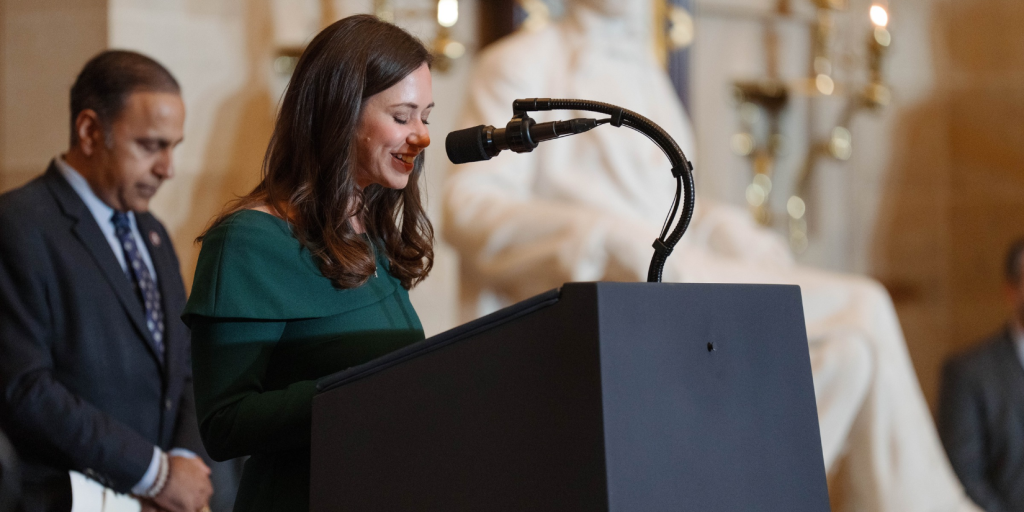
ABC of Alabama recently brought together industry leaders, elected officials, and local communities for the Powering Tomorrow Data Center Summit.
The goal was simple: separate fact from fiction.
Through panel discussions and Q&A sessions, we took a closer look at what data centers are, how they operate, and what they mean for Alabama’s long-term economic growth.
One thing became clear throughout the conversation. Too much of the public debate around these projects is being shaped by claims that simply don’t hold up to the facts.
Let’s start with the one you hear most: that data centers are sticking ordinary families with their power bill. In Alabama, the opposite is happening. When Google expanded its Jackson County campus this year, it agreed to cover 100% of the power it uses and the cost of the infrastructure it needs.
Google’s commitment reflects the industry’s alignment with President Trump’s Ratepayer Protection Pledge.
The public has also been inundated with misinformation about data center water use.
In reality, modern data centers use closed-loop cooling systems that recycle the same water, and some operators have gone even further by building water systems that benefit the entire community.
Correcting misinformation does not mean dismissing legitimate concerns.
At ABC, we believe the public has a right to transparency about water and power use, as well as other concerns surrounding these projects. Alabamians deserve clear, straightforward answers about how data centers will affect their communities.
But we must also remember what these projects represent.
Data center construction strengthens Alabama’s digital infrastructure, which is becoming as essential to daily life as roads, bridges and water lines. Data centers support our hospitals, banks and 911 systems. Any state that wants to compete in the modern economy can’t afford to let this opportunity pass by.
Since the start of 2024, data center construction spending has grown by more than $20 billion nationally, while the rest of commercial construction fell by nearly $65 billion, according to ABC National’s own data.
That new investment will go to states that are willing and ready.
In Alabama, we have the land, water, and energy to capitalize on this moment.
For the construction industry, that means high-paying jobs and steady work for the electricians, pipefitters, ironworkers, and laborers who build and maintain these projects.
It also means greater demand for Alabama-based suppliers and generational investment in our local economies.
But the opportunity goes beyond construction. A well-planned data center can leave behind infrastructure that benefits a local community for decades. When operators work with the communities that host them, they can invest in utilities that local taxpayers might otherwise have to fund themselves.
Take Kuna, Idaho, where Meta built a $70 million water and wastewater treatment system and handed it over to the city to own and operate.
The plant was deliberately built larger than the data center needed, allowing it to serve homes and businesses across a growing part of town.
That is infrastructure residents might otherwise have spent years and their own tax dollars trying to fund.
Google’s Jackson County campus tells a similar story here in Alabama.
The company built on the site of a retired coal plant, put existing power lines back to work and set up a fund to help local families with their energy bills.
That is what a strong community partnership should look like: working together to ensure these projects deliver lasting benefits for the people and communities that host them.
None of this happens by happenstance.
Operators must be transparent about water and power use, clear about who pays for what, and willing to work directly with the communities that host them. Alabama should expect that level of partnership from every project.
We called our event Powering Tomorrow because that is exactly what is at stake.
When communities have a seat at the table, and projects are planned responsibly, data centers can be a generational asset for Alabama.
We cannot afford to miss out.
Jay Reed is President of the Associated Builders and Contractors of Alabama.