6 days ago

Ivey announces final end dates for COVID-19 public health order, state of emergency — ‘Alabama is open’ and ‘moving forward’

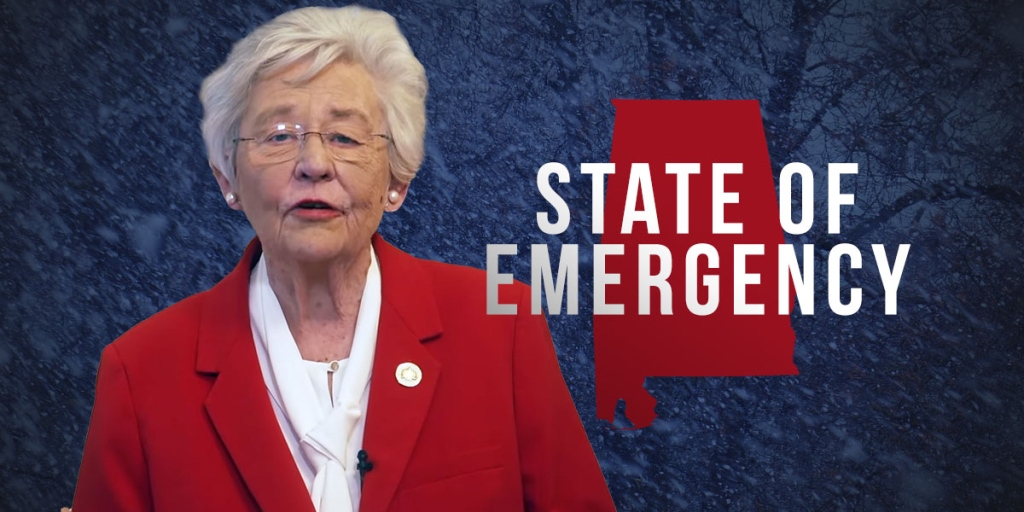
Governor Kay Ivey on Monday announced that Alabama’s COVID-19 public health order and state of emergency have both been extended — but for the final time.

The public health order — currently called “Safer Apart” — will end Monday, May 31, 2021, and the state of emergency will end Tuesday, July 6, 2021. Ivey first declared a state of emergency due to the coronavirus on March 13, 2020; she has extended and amended the public health order several times since then.

“For over a year now, Alabamians, like people around the globe, have made sacrifices and adjusted to a temporary ‘new normal.’ We have learned much since last year, and this is absolutely now a managed pandemic. Our infection rates and hospitalizations are in better shape, and over 1.5 million Alabamians have had at least one shot of the COVID-19 vaccine,” Ivey said in a statement on Monday.

“Alabamians have consistently stepped up to the plate over the course of this pandemic, and I know they will continue to do so,” the governor added. “I am pleased that we have shown the rest of the country that we are gritty and determined. We are signaling loud and clear that Alabama is open, and we are moving forward.”

The new iteration of Ivey’s Safer Apart order consists primarily of recommendations aligned with CDC guidance. However, specific guidance applies to two groups, per the governor’s office. Senior Citizen Centers must continue to follow guidelines issued by the Alabama Department of Senior Services. Hospitals and nursing homes must follow current guidance from the federal Centers for Medicare and Medicaid Services with respect to visitation. Barring a major spike in COVID-19 cases, these last remaining requirements should be lifted with the expiration of the state health order on May 31.

State Health Officer Dr. Scott Harris stated, “As we approach the fourteenth month of this pandemic, we are pleased that two-thirds of Alabama residents age 65 and older have been vaccinated. While some barriers such as transportation remain, more than 1,300 providers in the state are administering safe and effective COVID-19 vaccine in communities throughout the state.”

“We are very appreciative of Governor Ivey and our excellent working relationship with the Alabama National Guard. The state is really fortunate to have these men and women to support us,” he continued. “Guard members have concluded six weeks of vaccination clinics in 24 rural and underserved counties, and now are planning smaller mobile sites in each public health district to offer vaccine to hard-to-reach populations. I am excited about the progress that has been made.”

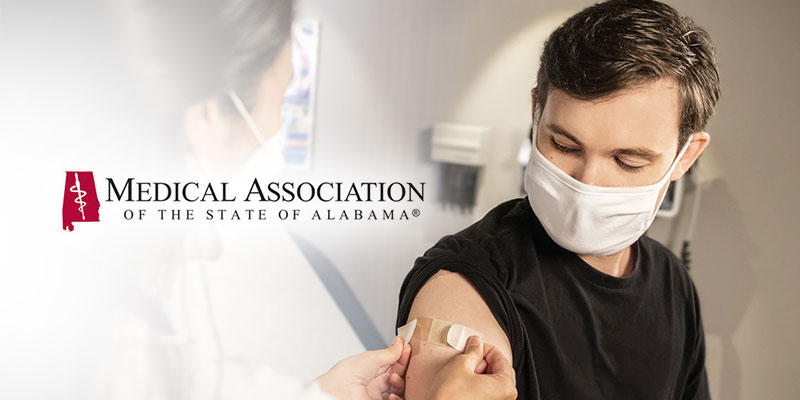
As of April 5, all Alabamians ages 16 and older have been eligible to receive the COVID-19 vaccination. Ivey continues to encourage Alabamians to get the safe and effective vaccine.

“Look, I have been vaccinated,” she concluded. “I believe in the science, believe that it works and have confidence in it. So, like I said, I have been fully vaccinated, and I will live like I have been fully vaccinated. Similar to when we ended the mask requirement, this final extension gives all Alabama health care providers, businesses and individuals adequate time to make preparations.”

Harris is set to give an update on herd immunity progress to the Alabama House Health Committee on Wednesday.

Sean Ross is the editor of Yellowhammer News. You can follow him on Twitter @sean_yhn
5 hours ago

VIDEO: Medical marijuana passes, gambling bill does not, another GOP civil war and more on Alabama Politics This Week …

Radio talk show host Dale Jackson and political consultant Mecca Musick take you through Alabama’s biggest political stories, including:

— What is next for marijuana after medical marijuana passes?

— Gambling bill dies again. Will it ever have enough votes?

— Should anyone really care that U.S. Representative Liz Cheney (R-WY) is feuding with former President Donald Trump and her own caucus?

88

Jackson and Musick are joined by FM Talk 106.5’s Jeff Poor to discuss the issues facing the state of Alabama this week.

Jackson closes the show with a “Parting Shot” directed at Attorney General Steve Marshall, imploring him to start shutting down casinos that he has said in the past are illegal.

Dale Jackson is a contributing writer to Yellowhammer News and hosts a talk show from 7-11 AM weekdays on WVNN and on Talk 99.5 from 10AM to noon.

10 hours ago

Conclusion of Community of Lights campaign marks beginning of Junior League of Birmingham’s 100th year

How does an organization celebrate a century of community service? If that organization is the Junior League of Birmingham (JLB), it’s done by kicking off that 100th year with the culmination of the Community of Lights Centennial Campaign. When the five-year campaign concludes on May 6, it will have raised more than $1.25 million for the One Place Metro Alabama Family Justice Center.

As its name suggests, One Place provides coordinated services for survivors of domestic violence and sexual assault. From its offices on Birmingham’s Southside, representatives of the Jefferson County District Attorney’s OfficeYWCA of Central Alabama, the Crisis Center Inc.’s  Rape Response services and the Birmingham Police Department work together to ensure the availability and effectiveness of a comprehensive range of services. Previously housed in the basement of the District Attorney’s office, One Place moved into its own building in 2017, when the JLB committed to making the lead gift to acquire and renovate it.

657

The Community of Lights Centennial Campaign was created as an innovative means of fulfilling JLB’s commitment to One Place. According to the League’s point person for the campaign, it was structured purposefully to build community awareness and generate broader impacts on “an issue that is pervasive in our community, our state, and throughout the country.”

“It was critical to engage the whole community,” said Lindsey Tanner, chair of the Community of Lights Campaign. “We wanted to meet this need not only by raising money, but by doing it in a way that increases awareness of an issue that affects the whole community.”

To achieve that goal, JLB initially identified 20 “Torchbearers,” each tasked with activating donations from their professional and personal networks – and encouraging those potential donors to learn more about One Place. At the end of the first year, and each succeeding year, torches were “passed” to a new group of 20 Torchbearers (21 for the 2021 campaign), further extending awareness of One Place and its mission.

Since 2017, a total of 101 local Torchbearers have combined to put the Community of Lights campaign on pace to meet and exceed its $1.25 million goal. As impactful as the amount of funding raised, Tanner noted, is that the Torchbearers ultimately activated more than 6,000 individual donors.

“That’s powerful,” Tanner declared. “What our Torchbearers have led the way in accomplishing will continue to have significant impacts on our community’s collective success in dealing with domestic violence and sexual assault. The community is more aware and engaged now than it was five years ago.”

Alabama Power is among the local companies that have supported Community of Lights, with five executives serving as Torchbearers. Starting with 2017, they are (current positions): Leigh Davis, vice president of Economic and Community Development; Terry Smiley, vice president, Eastern Division; Amoi Geter, director of Corporate Communication at Nicor GasTequila Smith, vice president of Charitable Giving; and 2021 Torchbearer Staci Brooks, director of Marketing Communication. The Alabama Power Foundation also provided support to the Community of Lights campaign.

“Alabama Power has a long history of supporting efforts that meet needs at the local level,” Brooks said. “Our support of One Place and the Junior League’s Community of Lights multiyear campaign is one way we are helping address critical community issues and hopefully making the road to recovery a little smoother for survivors of domestic violence and sexual assault.”

Alabama Power parent Southern Company is also supporting the campaign. Tenley Armstrong, the company’s Birmingham-based associate general counsel, is a 2021 Torchbearer.

“At Southern Company, we understand how basic services form the critical foundation of our lives,” said Armstrong. “Only when our core needs are satisfied are we free to make the most of our lives, and One Place contributes to that by making it possible for women and children to have a safe, stable home life, free from abuse.

“When I think about more than 6,000 people working together to fund the Family Justice Center, I am in awe of what can be accomplished when generosity fuels commitment to a long-term goal.”

Culmination of the Community of Lights campaign is the first of numerous events that will mark JLB’s 100th year of service. A volunteer organization with a membership of approximately 2,300 women, JLB promotes and supports activities for developing the potential of women and improving the community through effective action led by trained volunteers. Each year, it provides funding and resources in support of more than 30 community projects, addressing issues that, in addition to domestic violence, include literacy, health education and financial literacy.

“We want to help create solutions to hard issues,” Community of Lights Chair Tanner said. “We’re here to evaluate needs and pull together the resources to address them. That’s been our role for nearly 100 years and will continue to be our role in the future.”

For more information, or to donate to the Community of Lights Centennial Campaign, visit communityoflights.swell.gives. For more information on One Place, visit oneplacebirmingham.com.

(Courtesy of Alabama NewsCenter)

13 hours ago

Reforming occupational licensing

Occupational licensing involves government-imposed requirements for practitioners in different professions, or what critics call government permission slips to work. Despite a lack of evidence of benefits to consumers, licensing has been proliferating across Alabama and America, with the percentage of workers covered rising from 5% to over 20%.

A new report from the Alabama Policy Institute and the Archbridge Institute offers some potential reforms. Not-So Sweet Home Alabama: How Licensing Holds Back the Yellowhammer State is written by Dr. Edward Timmons and Conor Norris of Saint Francis University. Dr. Timmons has extensively researched licensing, including a 2019 case study of Alabama barbers.

The economic argument for licensing is consumers’ difficulty verifying expertise. Does a person claiming to be an electrician truly know this job? If you knew the trade, you could quiz or test them. Yet our economy is built on the division of labor, which is really a division of knowledge. Instead of learning how to repair a car, you hire someone who knows how.

515

Markets can assure consumers of experts’ expertise. Reputation in various forms – including references, positive word-of-mouth, Yelp ratings, and brand names – accomplish this. Insurance also helps. An insurance company will only offer medical malpractice coverage to med school graduates.

Yet skepticism about how well markets work leads to calls for licensing. A state licensing law establishes a board of experts to set education, training, and testing requirements. The board verifies applicants’ qualifications and working without a license becomes illegal. Revoking licenses for professional misconduct weeds out bad apples.

Research finds that licensing increases prices for consumers and incomes for professionals without improving the quality of services. Education and training requirements must produce higher prices to let doctors, plumbers and hair stylists recoup their training and education costs.
The lack of quality improvement implies no gains for consumers to compensate for higher prices. Licensing boards may enact unnecessary requirements to artificially restrict the number of practitioners and boost earnings. Enriching some citizens at the expense of others is not, however, a legitimate task of government.

Public choice economics helps explain the proliferation of licensing. The return on political action to support or oppose a bill depends on the amount one has at stake. Licensing can boost practitioners’ incomes by thousands of dollars a year, while consumers pay a little extra when using a service, with the extra hidden in the overall price. Only professionals seeking licensing vote or make campaign contributions based on passage of the bill.

Timmons and Norris offer two reform proposals. The first is for Alabama to accept other states’ licenses, or reciprocity. Licensing reduces mobility because once licensed, a professional might have to incur significant costs to get licensed in another state.

This imposes a heavy burden on some people, particularly military spouses. The spouse of a service member who gets stationed in Alabama may lose the freedom to work in their profession without incurring costs to obtain an Alabama license. Some licensed professions already have reciprocity agreements; this proposal would require all to do so.

A second reform is sunrise review of new licensing proposals. Sunrise review is a variation of the sunset reviews required in Alabama and other states. Sunset review involves a study by a designated agency recommending either renewal or termination of a program, after which legislators must vote to reauthorize the program. Sunrise review requires an evaluation before establishing licensing.

As Timmons and Norris explain, licensing is the most extensive way government can regulate a profession; less intrusive forms of regulation include certification, registration, and insurance requirements. An objective review of the evidence makes sense; extensive regulation should only be employed for serious market problems.

Occupational licensing may improve the performance of some professional services markets. But licensing’s extensive application is likely due to the nature of legislative politics. We should seriously consider Not-So Sweet Home Alabama’s proposed reforms.

Daniel Sutter is the Charles G. Koch Professor of Economics with the Manuel H. Johnson Center for Political Economy at Troy University and host of Econversations on TrojanVision. The opinions expressed in this column are the author’s and do not necessarily reflect the views of Troy University.

14 hours ago

The Regions Tradition is back after a year off, but its support for the community never waned

In 2020, the global pandemic caused innumerable events to be cancelled, including the Regions Tradition, a major of the PGA TOUR Champions. Golfers and fans stayed home and a community event that had been happening for more than 25 years took an understandable back seat to safety.

But an important aspect of the tournament never missed a beat. In a year when the tournament wasn’t held, the support for the many nonprofits that benefit from the tournament — including the primary beneficiary – Children’s of Alabama – continued.

In all, the tournament raised more than $1.2 million for charity in 2020, a record for the tournament, pushing the total raised to more than $19 million over 25+ years.

Some of the monetary support from the tournament comes from attendees and individuals, but the vast majority of those funds come from corporate donations and support from businesses.

489

And as has happened in the past, this year as the tournament opened for play with the pros, another event just down the road was occurring – thanking those businesses and supporters for continuing the tradition of community support – in 2020, 2021 and beyond.

Coming together for common good

“This event is so important to our community,” said Tony Luebiter of CB Richard Ellis. “It supports so many organizations here, and until you’re a part of it you probably don’t realize the impact it makes.”

That sentiment was one shared by many of the businesses and suppliers that support the Regions Tradition, many of whom participated in an annual sponsor and vendor golf outing hosted by Regions.

“The Regions Tradition is not just about golf,” said Brett Couch, head of Regions Corporate Real Estate and Procurement. “It’s about community. It’s about helping Children’s Hospital… Participation from our vendors is critical to the overall Regions Tradition success.”

Many of the participants in the event have been long-term supporters of the tournament.

“We’ve been supporting the tournament for more than ten years, said Jeff Elliot, sales representative from Dell Technologies. “Dell gives millions of dollars to charity. We support many global efforts, but we also focus on local efforts and the communities we serve. That commitment to communities and engaging with them is something that Dell and Regions share.”

And it’s that commitment to community, and Children’s of Alabama in particular, that attracts such passionate support: “Children’s is such a huge aspect of the tournament. Supporting them and the work they do makes a difference,” said Rich Slaby, of KL Discovery.

More than charity, golf or business…

And when it comes to 2021, getting out and enjoying the sunny skies and a beautiful day of golf is icing on the cake. And an opportunity to return to some semblance of business — as close as we can come to normal.

“For more than 15 months, we’ve not been face-to-face,” said Luebiter. “This type of event reminds me how important it is to be with your customers and supporters, to share ideas and ask questions. It’s been so long. I just appreciate the opportunity to be able to meet with my customers – and other people – in a safe and secure way, outdoors.”

“I just appreciate Regions,” said James Kemp of KMS (Kemp Management Solutions). “The way we do business is similar – that we do well when we are doing good in the community.”

It is no surprise that the people and organizations that Regions looks to and depends on to serve their customers are the same ones that share a similar passion for the community and are critical in making a difference in the community. It’s a legacy of service that extends beyond business relationships – and beyond pandemics – to ensure that the community and vital services within it continue to receive the support they need.

(Courtesy of Regions Bank)

15 hours ago

‘Count the Kicks’ stillbirth-prevention campaign launches in Alabama during pandemic

The Alabama Department of Public Health (ADPH) is partnering with Count the Kicks, an evidence-based stillbirth prevention public health campaign, to educate and empower expectant parents in Alabama about the importance of tracking fetal movement in the third trimester of pregnancy. One out of every 113 pregnancies in Alabama ends in stillbirth, according to the Alabama Center for Health Statistics.

“This evidence-based campaign will help educate pregnant women and their families about simple and effective ways to improve birth outcomes,” said Samille Jackson, Maternal and Child Health coordinator, ADPH. “We are hopeful the prevention campaign will reduce the heartbreak too many expectant parents suffer when their babies are stillborn.”

Count the Kicks teaches the method for, and importance of, tracking fetal movement during the third trimester. Research shows the benefits of expectant moms tracking their baby’s movements daily and learning how long it normally takes to get to 10 movements. After a few days, moms will begin to see a pattern, a normal amount of time it takes their baby to get to 10 movements. If their baby’s “normal” changes during the third trimester, this could be a sign of potential problems and is an indication that the expectant mom should call her doctor.

315

During the COVID-19 pandemic, expectant moms have reported changes to their regularly scheduled prenatal visits and an increase in telehealth visits. Now is an especially important time for expectant women to track their baby’s movements every day in the third trimester. By doing so, expectant moms will have the peace of mind to know when things are all right and when things have changed.

Thanks to the partnership with ADPH, maternal health providers, birthing hospitals, social services agencies, childbirth educators and other providers in Alabama can order free Count the Kicks educational materials (available at https://countthekicks.org/) to help them have a kick-counting conversation with expectant parents.

Count the Kicks has a free app available in the iOS and Google Play app stores that provides expectant moms a simple, noninvasive way to monitor their baby’s well-being every day. The Count the Kicks app is available in 12 languages, including English, Spanish and Haitian-Creole, and its features include a kick-counting history, daily reminders and the ability to count for single babies and twins. Nearly 3,000 expectant women have downloaded the app in Alabama already.

“After the birth of my son in April 2020, the nurse explained how my story could have turned out differently if I had waited to come in,” said Shelley Patterson, a mom in Auburn. “I am thankful to God that I had heard about the Count the Kicks campaign and app from my friend.”

According to ADPH, Alabama lost approximately 527 babies to stillbirth between 2014 and 2018. In Iowa, where Count the Kicks began, the state’s stillbirth rate dropped by nearly 32% in the first 10 years of the campaign (2008-2018). Iowa’s rate went from 33rd worst in the country to one of the lowest, while the national rate remained relatively stagnant. ADPH is hoping to bring the same success to Alabama, which would save approximately 169 babies in the state each year.

(Courtesy of Alabama NewsCenter)