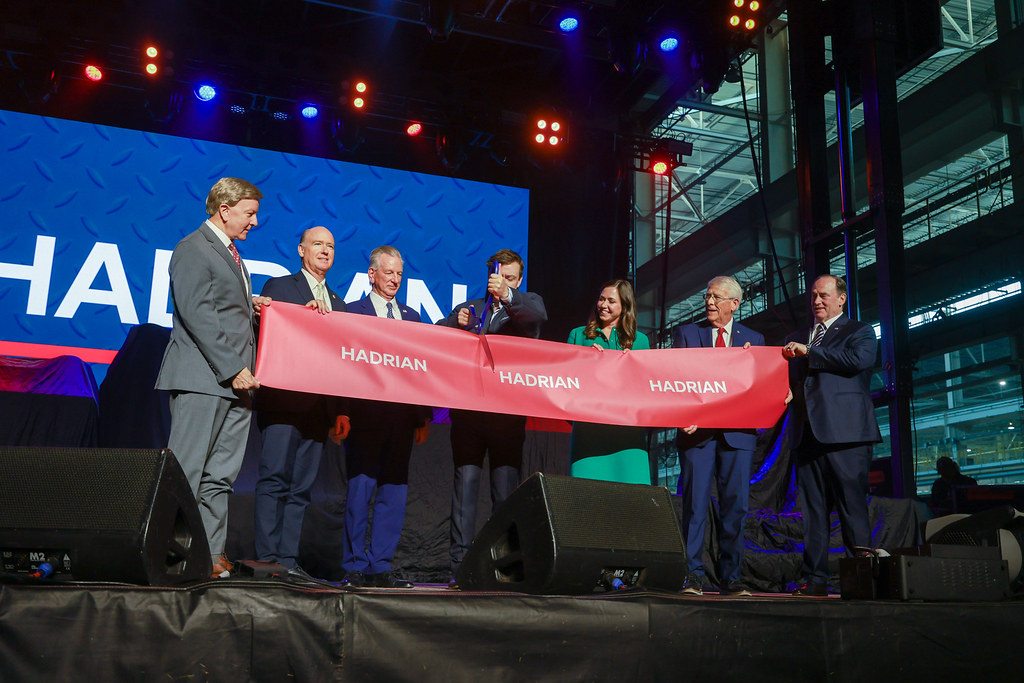
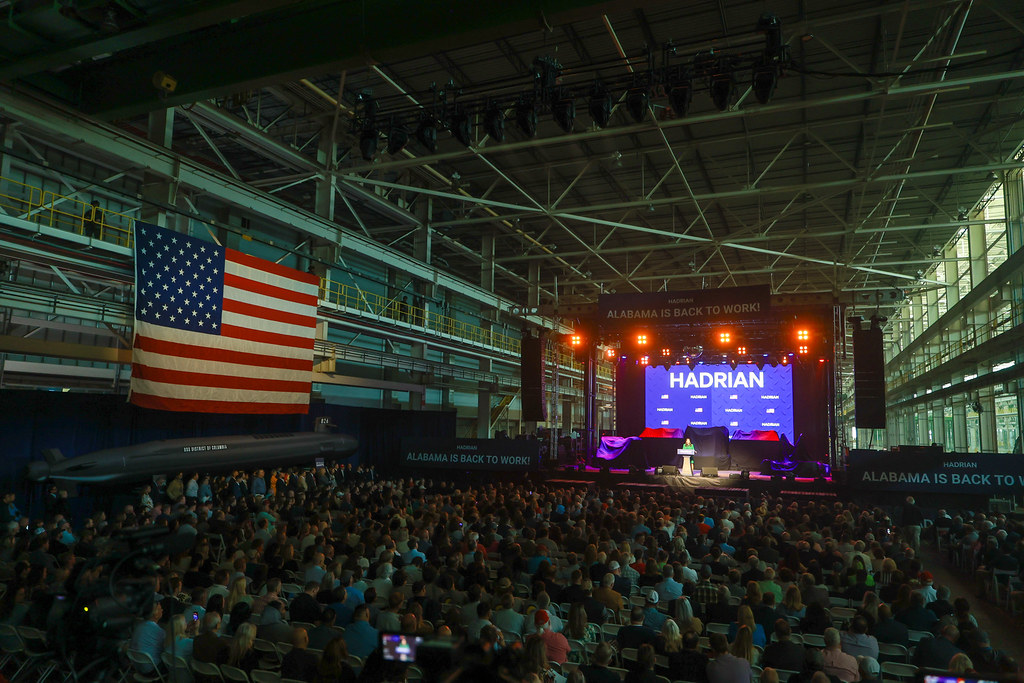
On Friday, March 20, inside a mile-long building in Cherokee, Alabama, a five-year-old startup cut a ribbon on a $2.4 billion factory that the U.S. Navy is counting on to help close one of the most dangerous production gaps in American defense.
The company behind it is one most Alabamians have never heard of.
Understanding what it is and how it got here explains a lot about where Alabama’s economy is headed and why the federal government is betting billions that places like the Shoals are the key to keeping America’s military edge.
Hadrian is not a traditional defense contractor. It is a manufacturing technology company that builds and operates AI-powered factories producing precision-machined parts for defense and aerospace.
The company was founded in 2020 by Chris Power, an Australian who moved to the United States in 2019 with $6,000 and a thesis that America’s industrial base was in critical decline. Power’s insight was that the small machine shops producing flight-grade components for rockets, jets, and submarines were aging out of the industry.
The skilled machinists who ran them were retiring, and nobody was replacing them. The work these shops do requires tolerances thinner than a human hair, and it has traditionally taken years of training to develop that level of precision.
Hadrian’s answer is a proprietary software platform called Opus. Opus takes a design file, determines how to manufacture the part, programs the machines, manages the workflow, and inspects the finished product. In a traditional shop, each of those steps requires deep expertise built over years.
Opus compresses that into software, allowing workers with no manufacturing background to reach full productivity within 30 days.
The model has attracted serious backing. Hadrian has raised $625 million from investors including Founders Fund, Andreessen Horowitz, and Lux Capital, and is valued at $1.6 billion.
The company already operates a production cell embedded inside a Lockheed Martin missiles facility and holds a strategic manufacturing partnership with defense startup Anduril. It reports equipment uptime of 75-80%, compared to roughly 30% in traditional aerospace manufacturing.
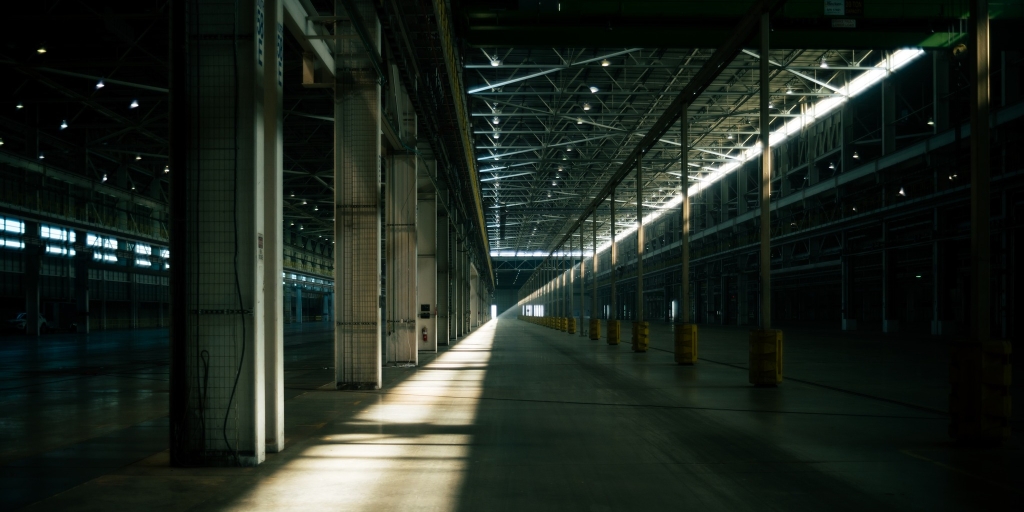
Before Friday, Hadrian operated three factories in California and Arizona totaling roughly 600,000 square feet. Factory 4 in Cherokee is 2.2 million square feet. That is roughly seven times everything the company had built before, in a single building.
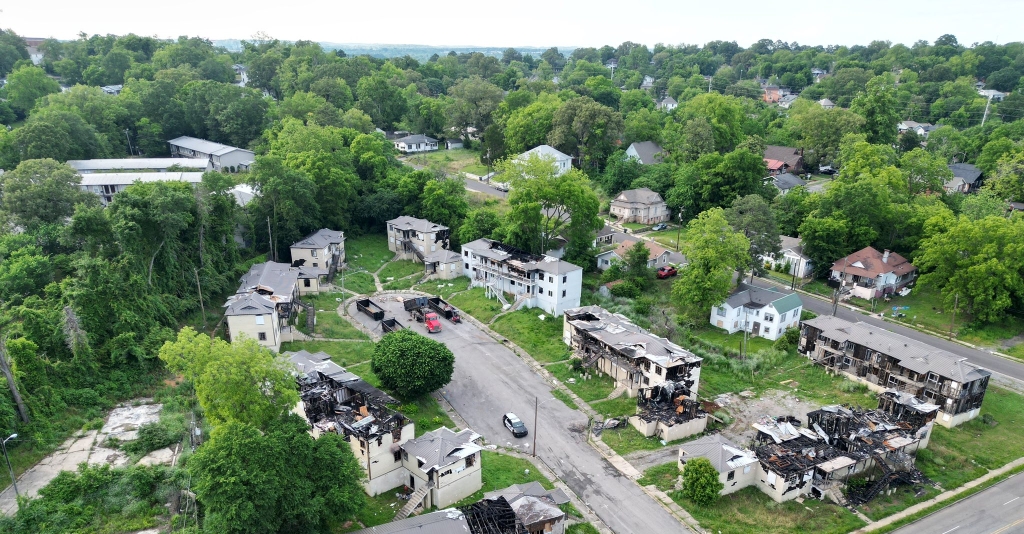
The building that now houses Factory 4 was not always a symbol of reinvestment. It was formerly the largest railcar manufacturing plant in the country, operated by FreightCar America, until the company closed in 2021 and moved production to Mexico.
The closure left behind a dormant industrial site and a community that felt the loss acutely.
Cherokee, the closest municipality to the plant, lost its only grocery store when its Piggly Wiggly closed in December 2024. The town has been in a food desert since.
Now, the same building is being transformed into an advanced submarine component factory expected to create more than 1,000 jobs paying north of $70,000 a year.
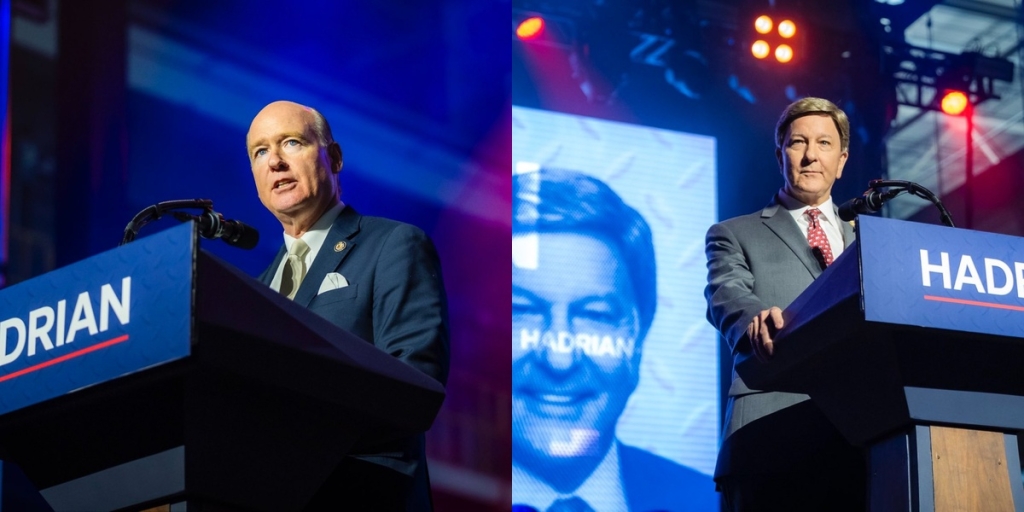
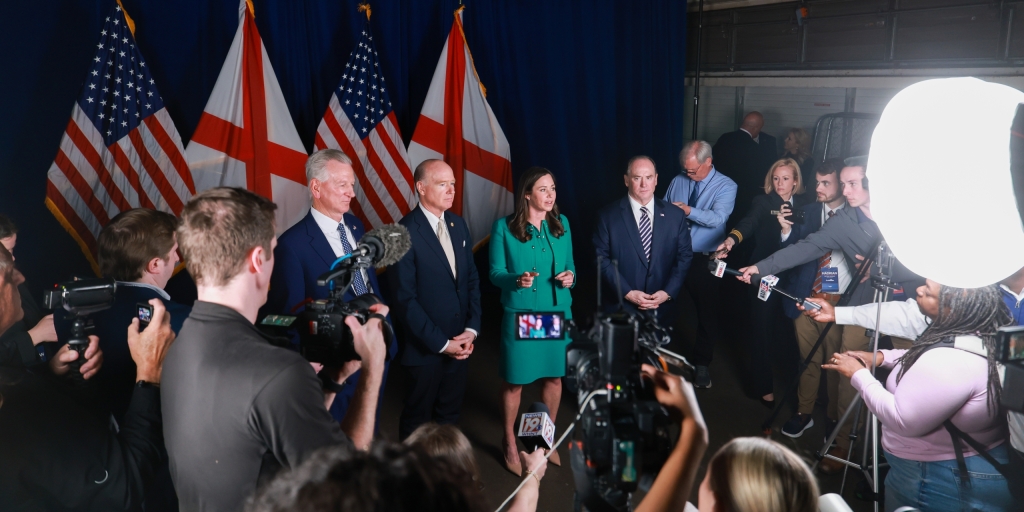
U.S. Rep. Robert Aderholt (R-Haleyville), who worked for years to bring the project to his district, pointed to three factors that drew Hadrian and the Navy to the Shoals.
The Tennessee Valley Authority provides energy at competitive rates. The Tennessee River offers inland water access. And Alabama’s workforce, developed through the state’s community college system and industrial training programs, was ready.
The economic impact is expected to ripple well beyond the factory’s walls.
U.S. Senator Tommy Tuberville (R-Auburn) compared the project to an automotive assembly plant, where the central facility drives a network of parts suppliers and support industries across the surrounding region.
“There will be buildings built all around several counties, building infrastructure for making parts,” Tuberville said. “It’s like bringing a car manufacturing place in. You don’t build the parts here. You put them together. They’ve got to be built in other places.”
The Hadrian facility also adds to what is becoming a statewide defense corridor. U.S. Space Command is relocating its permanent headquarters to Redstone Arsenal in Huntsville.
Lockheed Martin recently signed an incentive agreement to expand its munitions facility in Pike County. Austal USA builds ships and submarine modules in Mobile.
And now, Northwest Alabama is entering the map as a center for advanced submarine component production. From Huntsville to the Shoals to Mobile, Alabama’s defense footprint now spans the length of the state.
Factory 4 is a direct response to a national crisis in defense manufacturing that has been building for decades.
The American defense manufacturing workforce has declined from roughly 3 million in the mid-1980s to about 1.1 million. The maritime industrial base has been hit particularly hard.
After the Cold War ended, shipyards contracted, supply chains thinned out, and an entire generation of skilled workers left the industry.
A U.S. Office of Naval Intelligence assessment found that China’s shipbuilding capacity now exceeds that of the United States by more than 200 times.
The Navy is currently struggling to meet its submarine production target of one Columbia-class ballistic missile submarine and 2.33 Virginia-class attack submarines per year. The Columbia class carries the nation’s sea-based nuclear deterrent. Delays in its production are not just a budget problem, they are a national security problem.
House Armed Services Committee Chairman Mike Rogers (R-Saks) said the country had allowed defense spending to fall to its lowest level as a percentage of GDP since before World War II.
He and Senate Armed Services Committee Chairman Roger Wicker (R-Miss.) secured a commitment from President Trump to raise defense spending to 5% of GDP. The One Big Beautiful Bill Act, signed last July, included $29.2 billion in defense funding that helped make the Hadrian project possible.
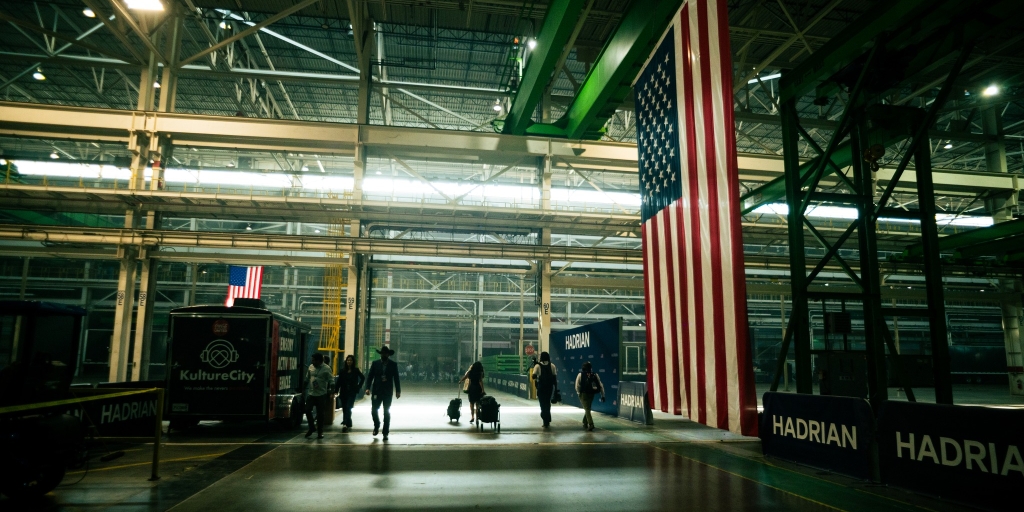
The Cherokee factory is the physical expression of a broader strategy the Trump administration calls the Golden Fleet, an initiative to restore American maritime power built on three pillars: rebuilding the fleet, revitalizing the maritime industrial base, and changing how the Navy does business.
The “changing how the Navy does business” piece is what sets Factory 4 apart.
Under the traditional approach, the government funds defense contractors upfront through cost-plus contracts, paying for the process regardless of efficiency. The Hadrian deal inverts that. Hadrian puts up more than $1.5 billion in private capital first. The Navy follows with $900 million, but only as the factory demonstrates results.
“We are done with free money from the Department of the Navy to defense primes,” Secretary of the Navy John Phelan said. “Risk is shared. Performance is required.”
Factory 4 is the first of three Hadrian facilities planned for the maritime industrial base. One of the remaining two will be a “Foundry of the Future” focused on castings and forging. But Hadrian CEO Chris Power told reporters that three will not be enough.
“We need five of these big ones, just to help with the President and the Secretary’s vision of the Golden Fleet,” Power said. “This is just the start.”
Power added that future expansion at the Cherokee site could include work on drones and munitions, potentially broadening the facility’s role well beyond submarine production. When asked whether more investment was headed to Alabama specifically, Phelan did not commit to details but left the door wide open.
“We’ve got a couple other exciting things coming up,” Phelan said. “Just not in position to discuss it at this stage.”
Sawyer Knowles is a capitol reporter for Yellowhammer News. You may contact him at [email protected].