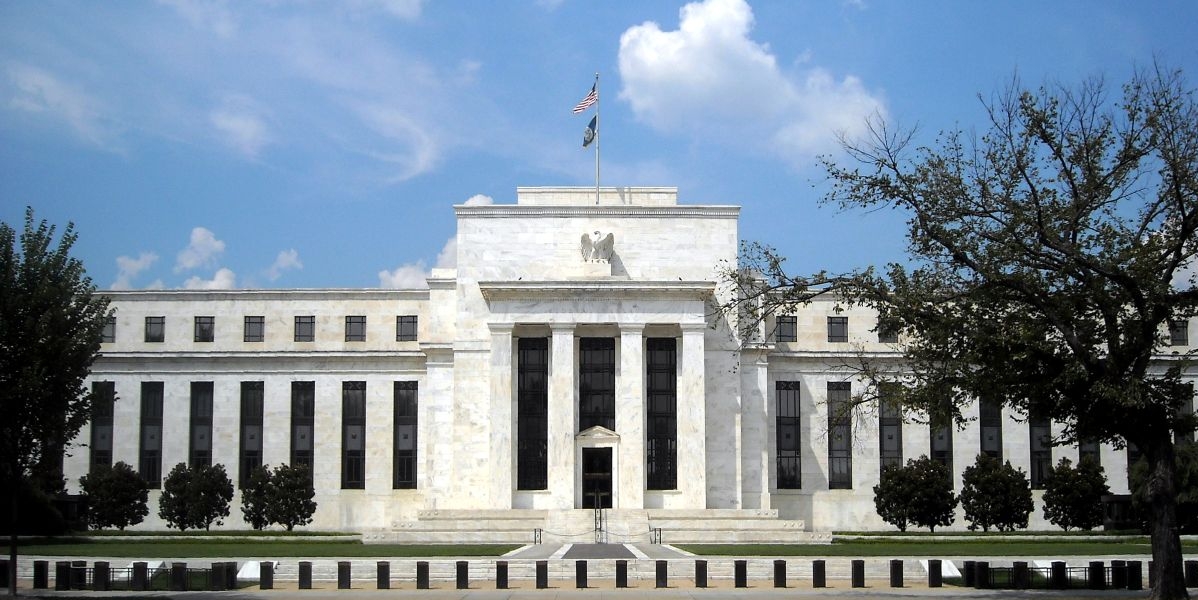
Confirmation hearings have begun for President Trump’s Federal Reserve chair nominee Kevin Warsh. This follows the President’s threats to fire current Chair Jerome Powell and removal of Board Member Lisa Cook. How important is Federal Reserve independence?
Governments today control but did not create money. Money emerged spontaneously, as economist Carl Menger detailed, and provides an example of spontaneous order. Money is a product of human action but not human design.
Money serves as a medium of exchange, or a way to carry out transactions. As people across the globe began producing different things, they had to exchange their products for the products of others.
Initially exchange took place through barter. But barter requires a double coincidence of wants, or that someone with eggs who wants corn finds someone with corn who wants eggs. Trading eggs for stones and buying corn with the stones is easier. People in different societies recognized this, leading to many things serving as money. Exchange supports specialization and the division of labor, which raises productivity above the subsistence level.
Good commodity money must resist counterfeiting. Absent counterfeiting, people acquire money only when giving up something of value or working for someone; all genuine money represents unconsumed production. Counterfeiting allows someone to purchase goods without contributing something of value to the economy.
Governments long ago took over money to raise revenue. Rulers placed a seal on gold or silver coins to help prevent scraping and charged for this. Such charges are origin of the term seigniorage, which today refers to revenue from the inflation tax.
Government monies today are not tied to gold and thus are fiat currencies. The idea of a central bank emerged in the 1800s to control the supply of government money. The Federal Reserve was created in 1913 as the U.S. central bank.
Taxes and government control over money predate political liberalism, or the idea that government should serve the people. Liberalism is founded on moral equality, which implies that a king or emperor is not superior to the people. Government is legitimate only if it serves the citizens.
Libertarians claim that taxation is theft. Taxation resembles theft: armed men stand ready to harm the victim or taxpayer who refuses to pay. Only the consent of the people differentiates taxation from theft. Thus, the American revolutionaries’ cry that, “Taxation without representation is tyranny!”
Government money creation resembles counterfeiting, most obviously when the U.S. Treasury prints new dollars. Money creation is not counterfeiting only if citizens consent, meaning that the Fed must improve economic performance.
Implementing popular consent with a central bank is challenging. Nations’ central banks were created under different institutional rules. Some nations insulated their central banks from control by elected officials while sometimes politicians possess significant influence.
The Fed is relatively independent according to economists’ metrics. The Board of Governors and the presidents of the twelve regional Fed banks share governance. Member banks elect the regional bank presidents. The seven Governors serve 14-year terms with one appointed every other year.
The variation of control mechanisms let economists investigate the impact of central bank independence. The evidence is clear: independence reduces inflation without lowering growth or increasing unemployment.
Why? Elected officials’ pursuit of reelection may not coincide with serving their constituents. Voters hold elected officials at least partly responsible for economic performance.
Politicians consequently wish to stimulate the economy to boost their reelection chances, creating a political business cycle. This includes increasing the money supply, even though this eventually produces inflation. Economist Kevin Grier’s research finds evidence of a U.S. political monetary cycle despite the Fed’s relative independence.
Independence does not enable the Fed rule of the American economy but rather limits elected officials’ ability to cause harm. How to ensure that the Fed serves We the People must wait for another day. But allowing our elected officials more control on our behalf is a prescription for inflation.
Daniel Sutter is the Charles G. Koch Professor of Economics with the Manuel H. Johnson Center for Political Economy at Troy University. The opinions expressed in this column are the author’s and do not necessarily reflect the views of Troy University.