Alabama is blessed with an abundant white-tailed deer herd of more than a million animals, and hunters can share that blessing with people who need nutritious protein through the Hunters Helping the Hungry (HHH) program.
With the change in the hunting regulations approved by the Alabama Conservation Advisory Board, the Alabama Department of Conservation and Natural Resources’ (ADCNR) Wildlife and Freshwater Fisheries (WFF) Division expanded the opportunities to manage deer herds with an increase in the daily bag limit for does from one per day to two per day in most of the state.
“The Hunters Helping the Hungry program started several decades ago, and it helps people manage deer on their property,” Conservation Commissioner Chris Blankenship said.
“If they have their freezers full and their friends’ freezers full and still need to take more deer, they can donate those deer to be processed to go to the food banks. It’s really great to take some of the bounty that God has blessed us with in Alabama to be able to provide protein to the people in need. I encourage people to find processors in their area that take part in the program and to drop those deer off.”
“We changed the regulation this year to allow hunters to take two does a day in most parts of the state. If you were going to harvest a doe and take it to the processor, we felt like increasing the daily limit to two does per day would encourage people to harvest more does to not only provide for their families but also help with the Hunters Helping the Hungry program.
We’re blessed in Alabama with a fantastic deer population, and, in some places, we have too many deer. We need to get those deer within the carrying capacity of the land. That will be good for the environment and good for farmers. Hopefully, people will harvest more does to get the population back in line to benefit the habitat.”
The HHH effort started as a joint project of the Governor’s Office, the National Rifle Association, the Phillip Morris Company, ADCNR and the Alabama Conservation and Natural Resources Foundation. Hunters Helping the Hungry was established in 1999. Since its inception, about a million pounds of ground venison have been donated and distributed.
WFF R3 (Recruitment, Retention, Reactivation) Coordinator Justin Grider said the venison donation program is important to the Department.
“It’s really important for a variety of reasons, the first of which is meeting the needs in communities that have nutrition deficits,” Grider said. “We’re fortunate in the state of Alabama to have an abundant deer population and an active hunting community. So, it’s really a great way for the hunting community to make a difference in those nutritional deficits.”
Another reason to encourage the harvest of deer, especially does, is to benefit herd health and the environment. The Alabama Extension Service says that deer cause more crop damage than insects or disease. Crop losses from deer damage are estimated at $11 million annually.
“We appreciate the Conservation Advisory Board and Department of Conservation and Natural Resources increasing the harvest limit for does and fully support the Hunters Helping the Hungry program,” said Alabama Farmers Federation President Jimmy Parnell. “Crop damage from deer has surpassed that from feral hogs in some parts of the state. Managing Alabama’s deer population not only improves herd health and helps sustain our important hunting industry, but it also helps farmers and can benefit those served by local food banks.”
Grider added, “This harvest regulation change makes it easier to participate. Another benefit is the ecological impact on the landscape in situations where property owners or leaseholders have an overabundance of deer that can impact the habitat because there are too many deer eating too much food. You can get your deer herd down to a sustainable, manageable number so it doesn’t impact the landscape negatively.”
Grider was with friends on a drive that went through the outskirts of town, and he spotted a problem immediately.

“We were driving through the suburbs, and you could see clear from the road to the back of a subdivision that was probably 200 yards to the wood line,” he said. “My friend said, ‘Man, it’s amazing they can keep these woods so clean.’ I asked what they thought that was. And they thought it was an effort by county officials. I told them it was because they had such a high deer population that they are eating everything they can reach, even standing on their hind legs. They said, ‘That’s really crazy. We see deer all the time, and we never thought to connect those dots.’”
Grider also pointed out that people are really focusing on where their food comes from and how it is prepared.
“One of the reasons people say they approve of hunting is for food,” he said. “This program really highlights the connection between hunting and food. This gives hunters the opportunity to provide a service to their community and have a positive impact on the overall perceptions of hunting.”
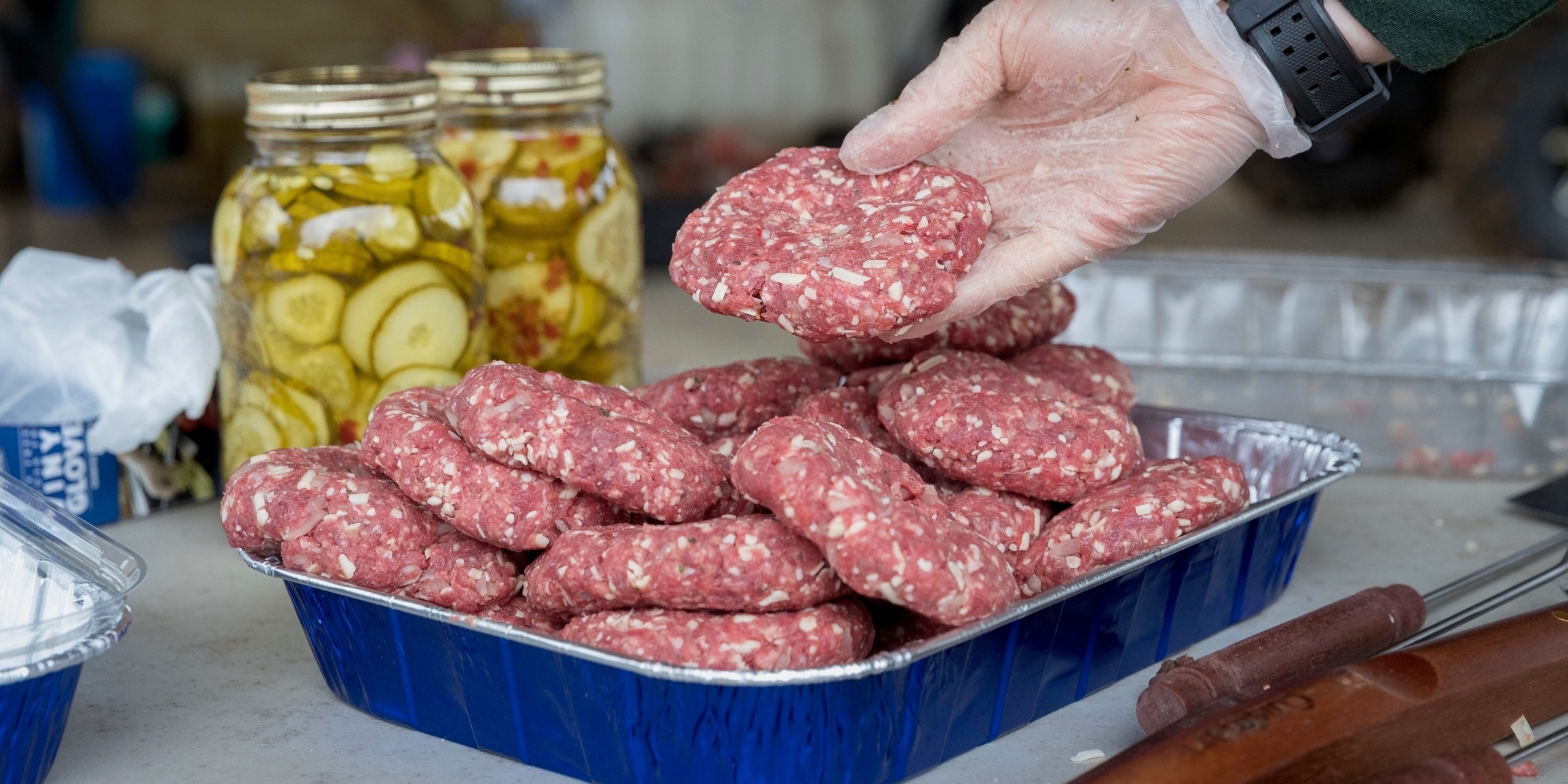
Donated deer meat is processed into ground venison, packaged and frozen, ready to be distributed to the food banks. There is no charge to the hunter for processing the deer. Processors are now reimbursed at $2 per pound of venison, up from the previous $1 per pound.
Food banks across the state receive the venison, which is then distributed to food pantries in their areas. Protein is in high demand, especially ground meat, which can be used in a variety of dishes like spaghetti, chili, meat loaf, stews and patties. Those who get the meat and have never had venison learn quickly how delicious and nutritious it is and are always coming back for more, according to the pantries.
The HHH program has been under Grider’s supervision for the past three years, and he said it wouldn’t be successful without the help of Jennifer Dilly, an administrative support assistant who has worked with the program for numerous years.
“Jennifer handles the clerical component of the program, communicating with the processors and the food banks, processing paperwork and processing invoices to make sure the processors are reimbursed,” Grider said. “She’s instrumental in making the program run smoothly.”
Grider said HHH needs more processors to participate in the program with notable holes in coverage in parts of the state. He asks hunters who know processors that are not a part of the program to encourage the processors to join the effort.
“All of south Alabama from Dothan to Mobile does not have any participating processors, and there’s nothing in the northeast areas of the state,” he said. “There are still opportunities for processors to join the program. It’s not too late. Food banks are in need of protein all over the state.”
Processors can call (334) 242-3467 for more information or to sign on as a participating processor or contact Dilly at [email protected].
“The ecological benefits, the social benefits, the nutritional benefits – there are a lot of good reasons to have this program,” Grider added.
Visit www.outdooralabama.com/hunting/hunters-helping-hungry for more information and an interactive map of participating processors and food banks.
David Rainer is an award-winning writer who has covered Alabama’s great outdoors for 25 years. The former outdoors editor at the Mobile Press-Register, he writes for Outdoor Alabama, the website of the Alabama Department of Conservation and Natural Resources.