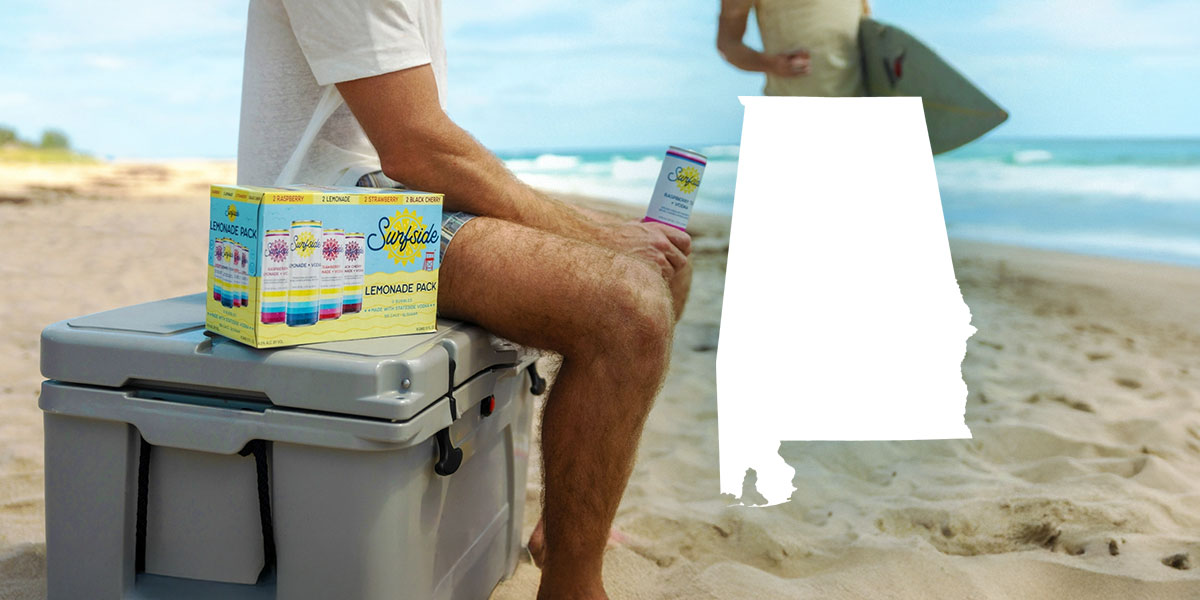
The Alabama Legislature has spent years debating the “ready-to-drink” issue, premixed canned cocktails that consumers increasingly expect to buy where they already buy beer and wine.
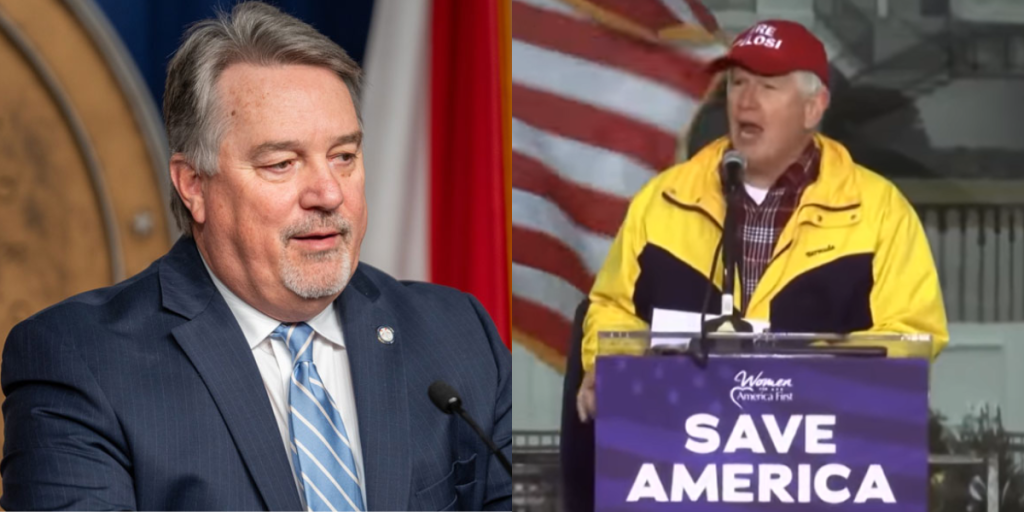
But now, Alabama Senate President Pro Tem Garlan Gudger and Speaker of the Alabama House Nathaniel Ledbetter say the politics of that fight might change in 2026.
At Yellowhammer News’ annual Legislative Preview event Tuesday night, Gudger (R-Cullman) said momentum has shifted over the last year, and more stakeholders have aligned behind some version of a bill.
When the question was raised, Speaker Ledbetter (R-Rainsville) joked that his chamber already passed that bill — last session.
This year, it’s in the Senate’s court to originate and pass a bill for the House to take up.
But that momentum is now in the form of SB217, virtually identical to the bill that passed the Alabama House and cleared the Senate Tourism Committee last year, but with added enforcement provisions to crack down on bad actors, and a wave of sponsors from both sides of the aisle.
“I think you’ve got people who have been aligned. If you just cut down the middle, you’d have 50% on one side and 50% on the other side. This past year, you ended up with about 75-80% on one side and about 20% on the other,” Gudger said.
[Alabama Alcoholic Beverage Control] ABC has never taken a stance. And so we’re trying to figure out what is best for Alabamians.
And it’s really not about access. Your last wording there was about getting Alabamians access, just to make sure we’re all on the same page: Alabamians already have access to RTDs if you go to a 21-and-over store, right?
Now, if we do change that so it goes in convenience stores and grocery stores, you’re going to have a lot more access and a lot more sales—that’s just what’s going to happen. So the key is: How do we control that the best we possibly can?
So it’s different opinions. But the key when this bill comes up is, it’s hard to say one size fits all. And I believe that’s why we haven’t had success on this bill like we normally do when we bring people to the table, because it’s been going on forever.
I do think there’s headway this year, momentum, to handle this situation one way or the other in the Alabama Senate. And Alabama ABC stepping in with an email the other day for the first time, I thought that was very interesting. Now they’re taking a stance.
So from that, we’re really not just looking at two options, but three. We want to do what’s best for Alabama. We want to make sure we have control. And at the same time, if we’re going to have more access, we’re going to be able to prosper from it, to not only enforce it, but also have a revenue stream come in.
So we’re hot and heavy, getting ready to start that process in the next two to three weeks. It’ll be a big topic in the Alabama State Senate coming up.”
Under current Alabama law, most spirits-based RTDs, such as canned cocktails made with distilled spirits, are generally treated as liquor, which means they’re typically limited to ABC stores and licensed package stores — not the broader beer-and-wine retail footprint in grocery and convenience stores.
The proposal in recent years has centered on creating a new, tightly defined product category that’s low-ABV and single-serve, so it can be regulated more like beer and wine at retail while still staying under ABC oversight.
Behind the scenes, the biggest snag hasn’t been ‘if’ — it’s been ‘how.’
Alabama’s alcohol system is built around brand-by-brand, territory-based wholesaling, and spirits RTDs don’t neatly fit the existing beer-and-wine retail channel versus the liquor channel.
But the latest framework tries to settle that fight by creating the “mixed spirit beverage” category and requiring each supplier to assign exclusive sales territories and sign written distribution agreements with licensed wholesalers, keeping the product inside a regulated, trackable network rather than creating a new workaround supply chain.
“Yeah, what he said,” Speaker Ledbetter said jokingly after Gudger’s detailed analysis of the playing field now in 2026.
“This has been a process. When this thing first came up, there was no way we could pass it. It was impossible, because there were so many different entities pulling against each other.
Now, just last year, a lot of them came to the table. The numbers have changed, and more people agree with what they want to do.
So it’s like a lot of other bills we pass. It’s compromise. You give and take. And I always tell people: When you’re talking about a bill everybody disagrees on, once everybody disagrees equally, that’s probably the time to pass it.”
Especially for new members, it’s important that you’ve got to be able to agree to disagree sometimes, and then you’ve got to move forward to the next project.
But this is one that’s been on the table for a while, and I know the Pro Tem has worked really hard. When we’re able to get to the right place, I know they’re going to do something with it when it’s time.
It’s no different than school choice. We worked on that a couple years and finally got something we thought we could live with and could afford. A lot of bills take two or three years to get massaged to where they need to be.
If this one takes that, that’s okay. Because what we need to do is get it right. I think that’s the most important thing,” Ledbetter said.”
Tuesday was the seventh day of the 2026 legislative session.
Grayson Everett is the editor in chief of Yellowhammer News. You can follow him on X @Grayson270.