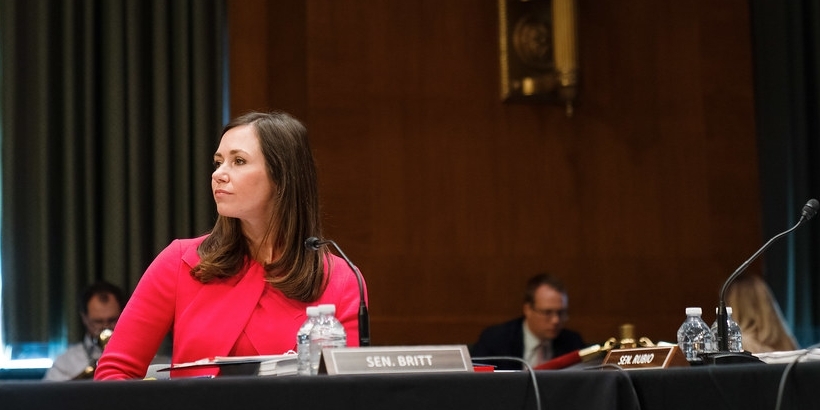
U.S. Sen. Katie Britt (R-Montgomery) introduced a bill Wednesday to help stop scams targeting families, seniors and small businesses. The proposal would create a national office to help banks, law enforcement, phone companies and online platforms share information before a scam costs someone money.
Britt’s office said the National Office for Scam and Fraud Prevention Act would place the new office within the Executive Office of the President. The office would develop a national strategy and coordinate the work of federal agencies, law enforcement, financial institutions, telecommunications providers, technology companies and others involved in fraud prevention.
“Hardworking Americans should not have to worry that one fraudulent call, text, or online message could cost them their life savings,” Britt said.
Britt serves on the Senate Committee on Banking, Housing, and Urban Affairs. Her office said scams increasingly cross industries and jurisdictions. A scam can start with a phone call, text, social media post or online ad before a bank ever sees a transaction. Criminals can take advantage of gaps in how companies and agencies share information and respond.
Under the bill, the office would help government agencies and private companies share information about scams quickly, coordinate consumer education and improve assistance for victims. It would also support cooperation with state and local authorities and international partners.
“When we work together to identify threats earlier and share information more effectively, we can better protect American families and businesses,” Britt said.
The office would review federal spending on scam and fraud prevention and report to Congress each year on fraud trends, prevention efforts, challenges in coordinating a response and ways to improve it.
Six financial industry groups backed the proposal, including the Alabama Credit Union Association.
“Credit unions are member-owned cooperatives, so when scammers strike, they’re stealing from neighbors, retirees and working families who trust us with their savings,” said Ibby Dickson, the association’s manager of federal advocacy.
The Federal Trade Commission reported about $16 billion in consumer-reported fraud losses in 2025, up about 25% from 2024.
“Unfortunately today, fraudsters and scammers are exploiting gaps between telecommunications companies, digital platforms, and financial institutions,” said Lindsey Johnson, president and CEO of the Consumer Bankers Association.
“Scams and fraud are a growing threat to consumers, businesses and our national security,” said Rob Nichols, president and CEO of the American Bankers Association.
“It takes partners across every sector to protect Americans from scams and fraud,” said Amanda Eversole, president and CEO of the Financial Services Forum.
“America’s Credit Unions supports efforts to coordinate a comprehensive, cross-sector response to fraud and scams,” said Kathleen Coulombe, the group’s chief advocacy officer.
“Community bankers see the toll scams can take on their customers every day, from seniors who lose their retirement savings to small businesses whose payments get diverted,” said Rebeca Romero Rainey, president and CEO of the Independent Community Bankers of America.
Sherri Blevins is a staff writer for Yellowhammer News. You may contact her at [email protected].