In the hours after a crime, investigators are often working against more than time—they are racing against memory.
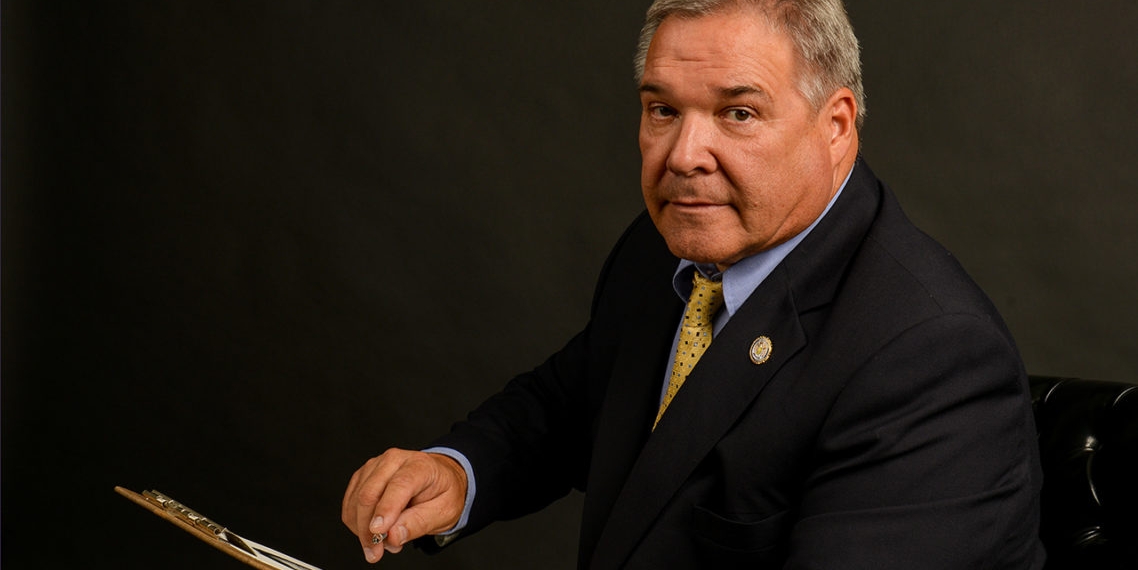
Details that seem clear in the moment can begin to shift or fade within days, making early interviews critical in identifying suspects. In Alabama, that process can include the work of Lt. Craig Shook, a forensic artist with the Alabama Law Enforcement Agency’s State Bureau of Investigations.
Shook works with witnesses to translate recollection into composite sketches—images that can help generate leads, identify suspects, and, in some cases, revive investigations years after they begin, according to ABC 33/40.
The timing of that process is key.
“What’ll happen is if it happens to a person and you have an eyewitness, I need to go ahead and start the drawing as soon as possible within a day or so,” Shook said. “If I don’t do that, then the mind will start piecing together people that they’ve seen … and it’ll start muddying up their image.”
Rather than drawing a face outright, the process begins with breaking it down.
Witnesses are asked to review collections of individual features—eyes, noses, mouths—and select those that most closely match what they remember. Those elements are then combined and refined into a single image, a process that can take hours.
“It’s like putting together a jigsaw puzzle,” Shook said.
That method reflects the challenge of working from memory, which can shift over time or be influenced by outside factors. While victims may retain stronger impressions, even those recollections can be affected by trauma.
The work also extends beyond initial suspect sketches.
Shook produces age-progressed images of missing persons and reconstructs faces from human remains using standardized measurements of tissue depth and facial structure developed through forensic research and used by agencies such as the FBI.
Those images can remain relevant for years, helping investigators revisit cases long after they go cold.
Even as technology evolves—including the use of artificial intelligence in imaging—Shook’s work continues to rely on direct interaction with witnesses.
“I think that you need the human element because there’s little nuances of somebody’s face that an AI-generated caption can’t get,” he said.
That interaction can also help uncover details beyond physical features, including mannerisms or other identifying characteristics that may not be immediately obvious.
His work often incorporates additional tools as well. Surveillance footage can be used to clarify details that witnesses could not fully recall, helping refine the final image.
In 2020, Shook was identified as Alabama’s only certified forensic artist, and he continues to assist agencies across the state in cases ranging from recent crimes to long-running investigations.
Whether used in the immediate aftermath of an incident or revisited years later, a single image can serve as a bridge between memory and evidence—capturing details before they fade and turning them into investigative leads.
Sherri Blevins is a staff writer for Yellowhammer News. You may contact her at [email protected].