A bill that would set minimum police staffing requirements for Alabama cities and authorize state takeover of departments that cannot protect their citizens cleared the Senate County and Municipal Government committee Tuesday.
SB298, sponsored by State Sen. Will Barfoot (R-Montgomery), would require Class 3 municipalities, those with populations between 6,000 and 99,999, to maintain at least two full-time officers for every 1,000 residents, based on 2020 census figures.
Cities that fail to meet the standard would have five years to come into compliance, provided they show at least 10 percent annual progress toward closing the gap.
If a city fails to meet the benchmarks, the Alabama Law Enforcement Agency (ALEA) would be authorized, though not required, to assume oversight of the local police department, including appointing a chief administrative law enforcement officer with broad authority over personnel and operations.
The state could also enter into cooperative enforcement agreements with the county sheriff or adjacent jurisdictions. Any state resources spent on oversight could be recovered from the municipality through a court petition filed by the Attorney General.
RELATED: Montgomery crime watchdog slams Mayor Steven Reed’s suggestion that criminals ‘go jump off a bridge’
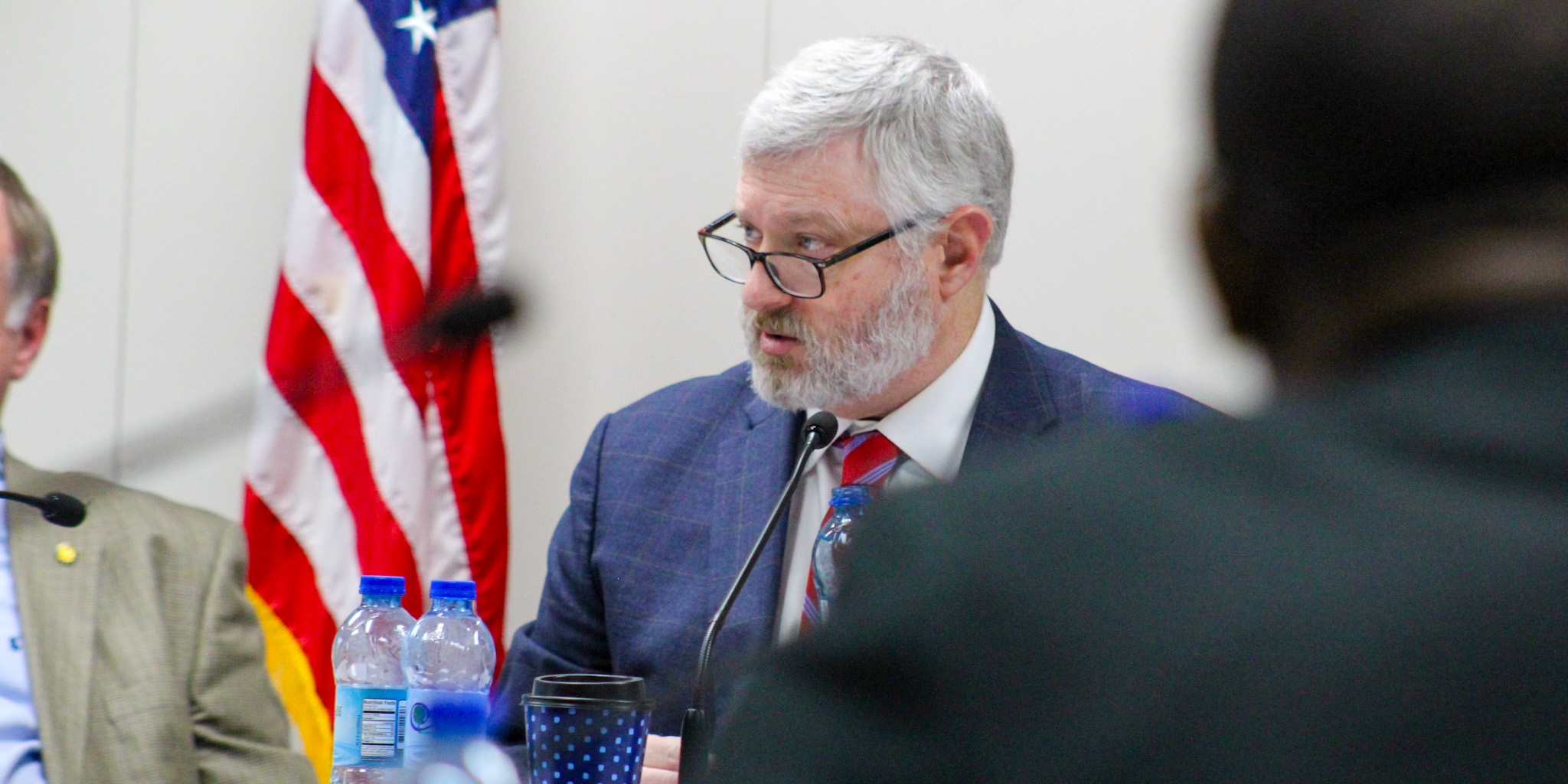
The bill drew questions from State Sen. Greg Albritton (R-Atmore), who raised concerns about the state taking on public safety costs that belong to local governments.
“If the state starts absorbing the cost for every municipality’s responsibility for safety, we might be able to do that,” Albritton said. “We can’t do it without the funds to do so.”
Albritton noted that ALEA is already providing police services to some cities without compensation and said the legislature needs to make a broader decision about the state’s role.
“If this is a growing trend on what we’re doing, we as a state have got to make a decision on what we’re going to do with this,” he said.
State Sen. Kirk Hatcher (D-Montgomery) offered an amendment that would require any costs associated with the bill to be paid from the General Fund. The amendment failed.
“This is an unfunded mandate,” Hatcher said. “If we are going to do this, let’s make sure the state can pay for it.”
Barfoot pushed back on the unfunded mandate characterization, pointing to Montgomery specifically as the bill’s primary target. He noted that the city has budgeted for roughly 475 officers in recent years but currently has somewhere between 220 and 230 on the force, and argued the shortfall reflects a management problem rather than a funding one.
“It’s not a lack of resources that the City of Montgomery has,” Barfoot said. “It is something other than that, and we need to allow ALEA to help the citizens of Montgomery.”
Barfoot also addressed the Metro Area Crime Suppression Unit, a state-funded law enforcement effort operating in Montgomery, calling it a temporary measure rather than a long-term solution.
“That is a band-aid approach,” Barfoot said. “That is not meant to be the taxpayers from around the state paying for what goes on here in the city.”
Montgomery Mayor Steven Reed testified against the bill at a public hearing last week.
SB298 now heads to the full Senate for consideration.
Sawyer Knowles is a capitol reporter for Yellowhammer News. You may contact him at [email protected].