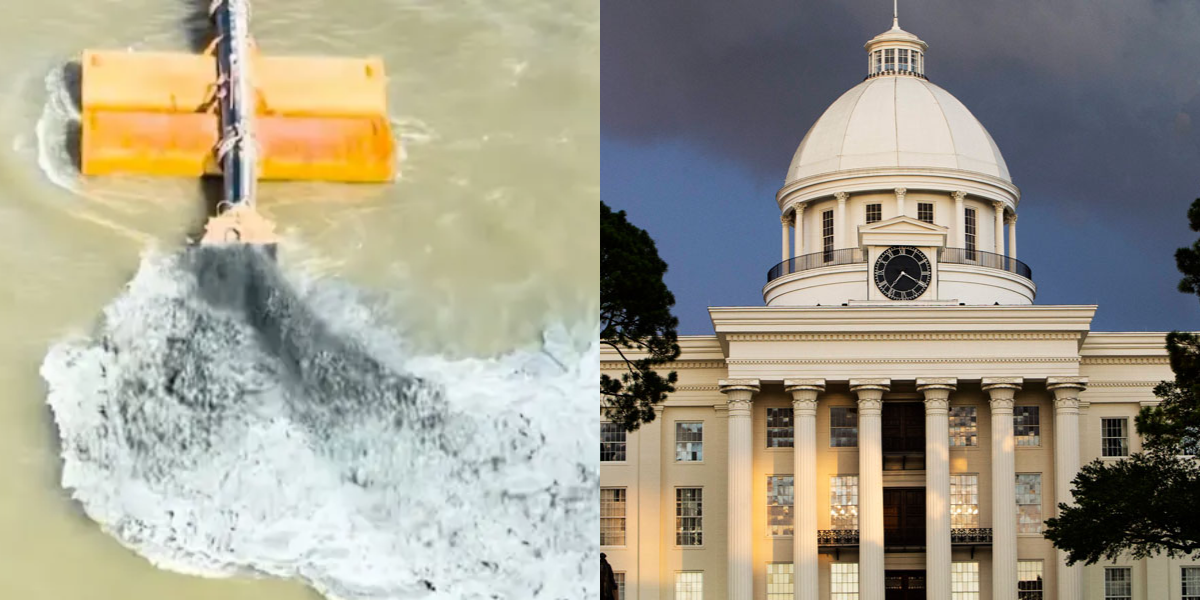
The Alabama Legislature gave final passage Tuesday to HB181, legislation banning the dumping of dredged sediment in Mobile Bay.
The bill, sponsored by State Sen. Chris Elliott (R-Josephine) and State Rep. Rhett Marques (R-Enterprise), prohibits the practice known as “mud dumping,” in which sediment from shipping channel dredging is sprayed into the bay.
Environmentalists say the practice clouds the water and smothers marine habitats including oyster beds and seagrasses.
“As Baldwin County’s state senator, protecting Mobile Bay and preserving the environment that makes our area such a special place to live, work, worship, and raise our families rank among my highest priorities,” Elliott said.
“With passage of this bill, we have shielded the commercial and sport fishing industries, ensured that our waters remain clean and clear, and protected the important oyster beds, seagrasses, and other aquatic life that mud dumping harms.”
“Those of us who reside in Baldwin County live in the most awesome place on Earth, and it’s up to us to keep it that way. Passage of the ‘Save Our Bay’ legislation will help ensure that our little piece of paradise remains a paradise.”
The U.S. Army Corps of Engineers, which conducts the dredging, refers to the practice as “thin-layer placement” and says it replicates natural silt distribution.
An estimated 90 million cubic yards of sediment will be produced in coming years as the Corps maintains shipping channels.
U.S. Senator Katie Britt (R-Montgomery) previously passed a federal provision requiring the Corps to dedicate 70% of dredged sediment to “beneficial uses.” The state legislation explicitly prohibits mud dumping from qualifying as a beneficial use in Alabama.
Similar bans have already passed in Florida, Georgia, and Louisiana. The bill now heads to Governor Kay Ivey’s desk.
Tuesday was day 9 of the legislative session.
Sawyer Knowles is a capitol reporter for Yellowhammer News. You may contact him at [email protected].