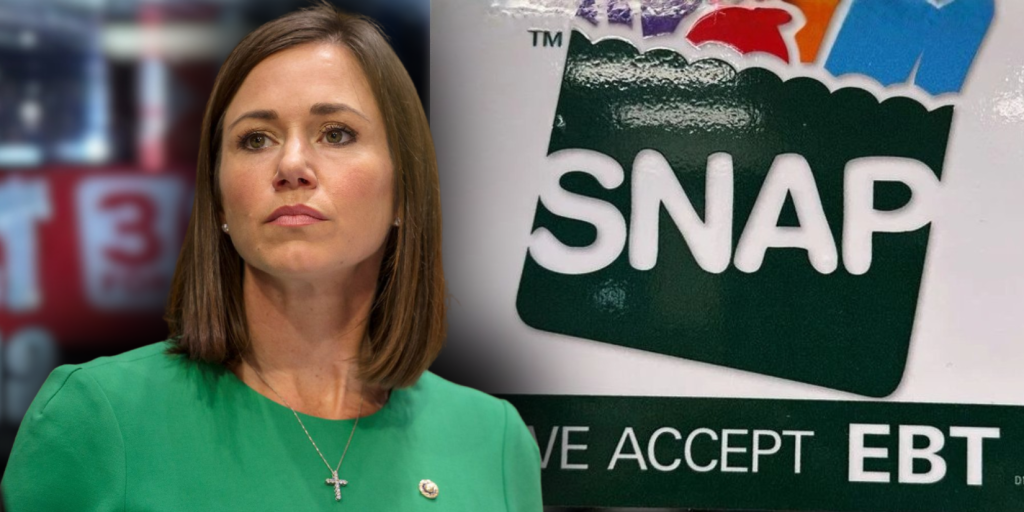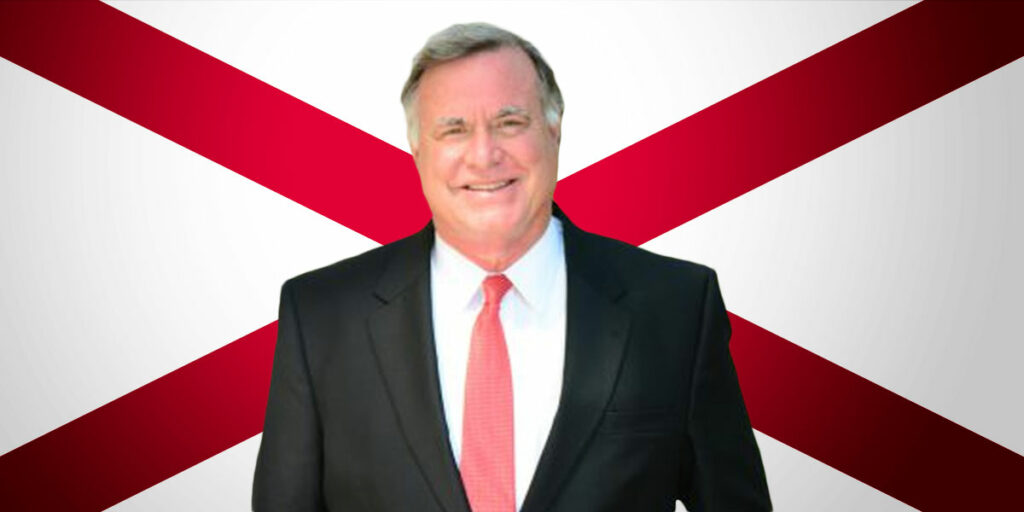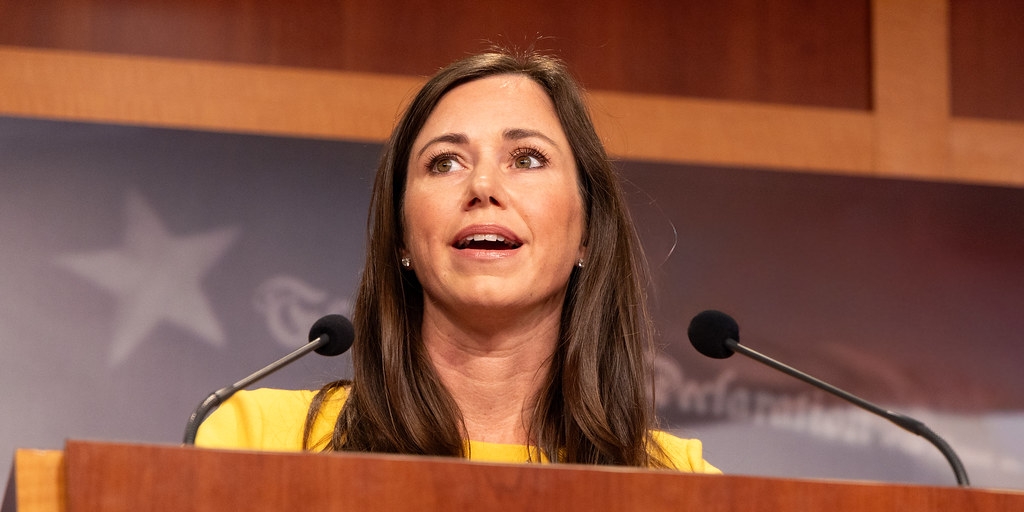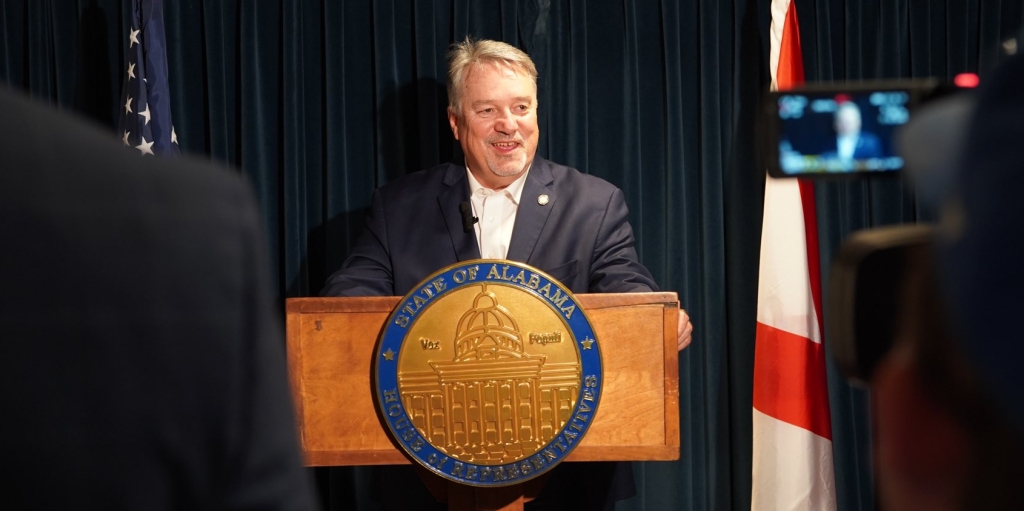
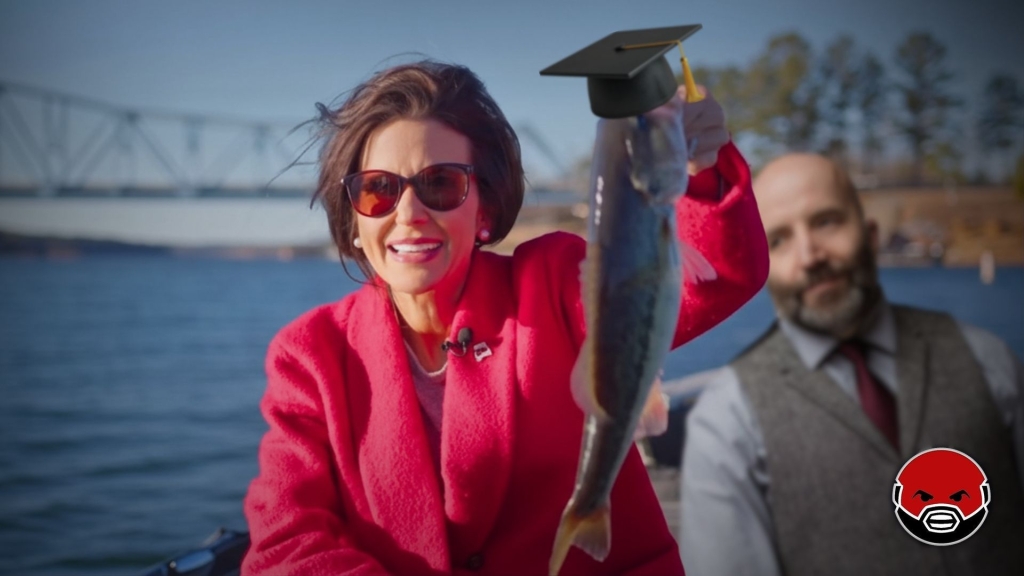


Twinkle Andress Cavanaugh, a small business owner and lifelong conservative Republican, announced another major endorsement of her campaign for Lieutenant Governor- this time by the Home Builders Association of Alabama.
“I am honored to receive the endorsements of builders and job creators across our great state,” Cavanaugh said. “Having owned several small businesses, I have signed both sides of a paycheck and am committed to sound conservative policies that allow job creators to do what they do best. I agree with President Trump: America truly is a nation of builders, and Alabama can lead the way to a tremendous American revival. With education and workforce development as priorities, our brightest days are ahead of us.”
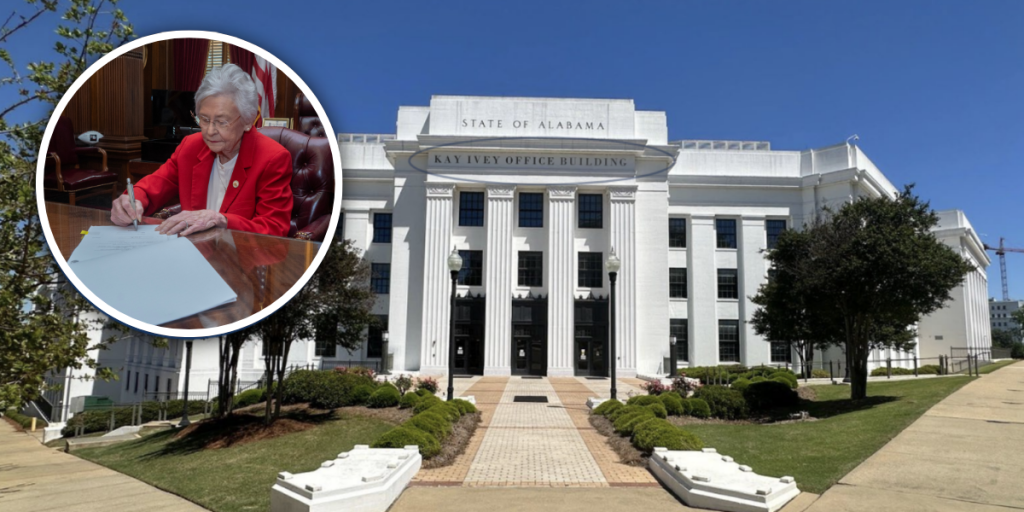
According to the latest reports filed with the Alabama Secretary of State’s Office, 114 special interest groups or PACs have donated to Governor Ivey’s campaign.
Tommy Battle has received more than 1,100 individual contributions from real Alabamians since his campaign launched. That’s more than any other candidate running. Only 14 PACs have contributed towards Battle’s fundraising efforts. In contrast, Governor Ivey’s numbers show she’s topped more than $1 million in contributions from her 114 PAC donations.
“Our numbers show the people of Alabama are behind us. They’re looking for a better vision and a better plan for moving Alabama forward,” said Battle. “I think the voters deserve to hear from my opponent about what commitments these endorsements carry.”
President Donald Trump recently proclaimed a tariff adjustment, imposing a 10% duty on aluminum imports and a 25% duty on steel imports. The recent tariff adjustment provoked a retaliation from China in the form of their own tariffs on hundreds of products imported from the United States. With tariffs from both the U.S. and China fueling market fears of an escalating trade war, we decided to take a look at the top exports to China by state from last year in order to help pinpoint which states and industries stand to lose the most. Our study shows the top ten exported commodities to China from every state, highlighting the amount, percent share, and top products within each commodity category according to data retrieved from the U.S. Census Bureau.
In 2017, Alabama provided 2.81% of the total value of U.S. commodities exported to China, ranking 10th among states with an amount of $3.62 billion.
"Frontier Airlines will begin direct flights from Birmingham-Shuttlesworth International Airport on April 11, the airline announced today. Frontier Airlines will start by offering direct service to Denver, Orlando and Philadelphia from Birmingham. Introductory prices will start at $39."
"The Pittsburgh Steelers are hiring Crimson Tide defensive line coach Karl Dunbar as their defensive line coach, according to a source."
"This gets Dunbar back to the NFL, where the 50-year old had been for most of his coaching career before heading to Alabama in 2016 as the replacement for Bo Davis."
"It will be the fifth NFL team he's worked for after stints as the defensive line coach for the Chicago Bears (2004), Minnesota Vikings (2006-11), New York Jets (2012-14) and Buffalo Bills (2015)."
"At 87, Clint Eastwood is not only trying new things, he’s trying daring new things, and his new film 15:17 to Paris represents one of the most audacious gambits of his career. To dramatize the tale of three Americans who tackled and subdued a heavily armed Islamist terrorist on a train out of Amsterdam in 2015, Eastwood cast the young men, none of whom had professional acting experience, as themselves. It’s a decision with little precedent in the entire history of motion pictures."
Officials say the child was fishing from the riverbank with his father when he fell into the water on March 28. The man went in after the boy and didn’t resurface.
Searchers found the body of 27-year-old James Rabon of Bonneau, South Carolina, on Sunday. Authorities haven’t publicized the name of the missing child.
(Associated Press, copyright 2018)
Are Democrats making too much of the Doug Jones Effect?
(PolitiFact/YouTube)
A long-suffering minority party pulls off a major upset in a special election for the U.S. Senate, fueling hopes among partisans of major gains in the upcoming midterm elections.
Alabama and Doug Jones?
Try, Massachusetts and Scott Brown.
Like Democrat Jones in 2017, Republican Brown in 2010 stunned the political establishment by beating a candidate from the long-dominant political party.
Whatever hopes Republicans had that Brown’s victory signaled a partisan realignment in the Bay State quickly evaporated, however. Despite an extremely favorable political environment nationally for the GOP and an unpopular Democratic president, politics in Massachusetts snapped back to normal by the time the November election rolled around.
Although Republicans picked up 63 seats in the House of Representatives that year, the party went zero for 10 in Massachusetts. The Democratic governor, Deval Patrick, won re-election and the party actually gained a seat in the state Senate. (Republicans did pick up 17 seats to give them 32 in the 160-seat state House).
Brown, himself, lasted only until the next election — in 2012, when he lost to current Sen. Elizabeth Warren (D-Mass.).
Will it be any different for Alabama Democrats? Political experts are skeptical.
“Because of Doug Jones’ win, you don’t reclassify Alabama as a competitive state,” said Jess Brown, an emeritus political science professor at Athens State University in north Alabama. “Alabama is still crimson red.”
Eric Ostermeier, a political researcher at the University of Minnesota and founder of the Smart Politics blog, said parties even in one-side states occasionally can pull off upsets under the right circumstances. But they usually prove to be outliers, he added.
“In general, most of the states where one party is in power for a long time, there is a normal pullback,” he said.
Parallels between Alabama in 2018 and Massachusetts in 2010 abound. Before their special election breakthroughs, the party of power in both states had not cracked a Senate seat in a long time.
For Alabama, it had been since 1992, when Sen. Richard Shelby — now a Republican from Tuscaloosa — won re-election as a Democrat. In Massachusetts before Brown, it had been even longer since a Republican had won— 1972.
Both Brown and Jones faced opponents who, despite having won statewide office before, carried liabilities into their special elections.
Alabama Republican Senate candidate Roy Moore, of course, had a controversial career because of his strident stands on social conservatism and then found himself the target of late-breaking allegations that he had inappropriate sexual contact with teenage girls when he was a young prosecutor in the 1970s.
Jess Brown said it created a perfect storm for Jones that is not easily replicated.
“His victory was the product of simply a very weak candidate,” he said. “The Alabama Republican Party practically could have picked a name at random out of the phone book and he would have won.”
Democratic Massachusetts Attorney General Martha Coakley, meanwhile, did not have anywhere that level of baggage, but she generally was regarded as a lackluster campaigner who committed some high-profile gaffes on the campaign trail. She went on to later lose a gubernatorial election to Republican Charlie Baker.
Alabama Democrats are undeterred, however. Everywhere you turn, the party is bubbling with excitement. Large numbers of Democrats signed up to run for office, including in Republican strongholds where the party in past years has not even bothered to field candidates.
Democrats tell each other and the world that the victory in December by Jones has them believing they can win.
Democratic Party Chairwoman Nancy Worley stops short of predicting a Democratic sweep in November.
“But I think the chances are good at getting other Democrats to follow Doug Jones’ winning mode,” she said. “He certainly inspired a lot of excitement.”
Worley said the party’s “unprecedented success” at recruiting candidates is going to result in many tight races, even if the Democrats don’t win them all.
“Quite frankly, the records of a lot of Republican legislators are going to be looked at closely,” she said.
But in the first test of the Jones Effect, a Democratic candidate came up short last week in a special election for the state House of Representatives in a district that Jones won in December with 57 percent of the vote.
Worley depicted the glass as half full, noting that Republican Rex Reynolds was well-known as a former Huntsville police chief and city official. Yet, Worley noted, Democrat Terry Jones kept the race much closer than he did in 2014 when he ran against incumbent Republican Jim Patterson.
“He stands a very good chance of winning in the fall,” she said, noting that the two candidates will square off in a rematch in November.
Jones, himself, seems much more cautious about imputing excessive meaning in his victory.
“Not in a sense from flipping a state from red to blue,” Jones told FM 106.5 radio talk show host Sean Sullivan last week in Mobile. “I don’t think that that is going to happen, and frankly, I don’t think it should happen in that context. What I’m hoping to see out of our election is people are now starting to focus on issues rather than party.”
But Jones, the Athens State political science professor, said the Jones win has energized a party badly in need of new life. That attracts volunteers and candidates who can lay the groundwork for gains down the road, he said.
“You’ve got to keep people believing victory is possible. … That’s the way you continue to grow,” he said. “That’s what Republicans did to become competitive.”
Ostermeier, the University of Minnesota political scientist, noted that of the 16 special Senate elections held in off years across the country in the last 70 years, the party trying to defend the seat lost a majority of the contests.
In four of those races, the winning candidate’s party went on to electoral success in the following election — Democrat William Proxmire in Wisconsin in 1957; Republican John Tower in Texas in 1961; Republican Kay Bailey Hutchison in Texas in 1993; and Democrat Ron Wyden in Oregon in 1996.
All four saw their parties pick up congressional seats in the next election.
So, Ostermeier said, short-term success is possible.
“That’s sort of the best-case scenario you could paint,” he said.
Taziki’s Mediterranean Café has named Dan Simpson as its new CEO. Simpson previously served as the restaurant’s Chief Innovation Officer from May 2016 through February 2018.
During this time, Simpson was instrumental in the growth of the restaurant brand visiting Taziki’s locations in all 16 states where the chain has a presence, gathering both customer and employee feedback. Taziki’s recently opened its 83rd restaurant in West Chester, Ohio earlier this month.
Simpson is working closely with Founder Keith Richards as the restaurant plans include having 100 locations open by 2019. The two have worked closely with Taziki’s board and staff to form a clarified purpose, mission and brand values to guide the next 20 years.
“Keith’s vision for his restaurant is an inspiration to so many, he has created an environment that combines extraordinary food with meaningful human experience,” said Simpson. “He has led the charge to offer fresh, healthy, diverse, and affordable food options to the tables of ten of thousands of people for the past 20 years.”
Richards is managing the flagship market in Birmingham, Alabama and will continue to lead Taziki’s culinary R+D and the HOPE program, Taziki’s signature charity.
The HOPE Program began after Richards decided to get more involved with special needs education. His restaurants have always employed those with special needs, but he realized they needed more opportunities.
The fresh, locally grown herbs – parsley, oregano, cilantro, basil, and rosemary – are grown by students at various HOPE programs across the U.S. and used to flavor the local restaurant’s Mediterranean-style foods. The overall goal of the HOPE Program is to teach students with special needs all aspects of the herb business using skills that will transfer to other jobs.
Virginia just began its own HOPE Program last week and is the ninth of its kind, with others in Little Rock, AR, Nashville, TN, Morgantown, WV, Atlanta, Ga., as well as Birmingham, Huntsville and Dothan, AL.
Richards will be traveling to Greece with his wife Amy and two sets of twins this summer to develop new menu items for the restaurant.
“Dan is working closely with me to carry out my vision for the next 20 years of Taziki’s,” said Richards. “His passion for working to create the new ‘Mediterranean-Coastal’ design for our restaurants has been an integral part of this process.”
The new design elements that Simpson launched for Taziki’s restaurants include community tables established to create a welcoming environment for conversation within the exposed stone and painted white shiplap adorned walls. Shades of bright white and deep ocean blue can be found in the restaurant’s interior accent pieces.
Hanging wicker lanterns provide a warm yet fresh ambiance, highlighting Taziki’s delicious menu teeming with original chef-driven recipes prepared daily from more than 100 fresh produce items as well as more than 60 herbs and spices flavoring the food. All meals are prepared from raw ingredients much like you would use in your own home. Taziki’s does not use fryers or microwaves while preparing meals for customers.
Natural lighting streams from windows and exposed wooden beams in the ceiling provide the experience of dining outdoors. In the back of the restaurant, a community board lists local non-profit events with information about how to participate, furthering the at-home, communal feel.
As a Taziki’s franchisee and managing partner at Fresh Hospitality from January 2015 until May 2016, Simpson learned what customers wanted and observed an over 60% increase in the amount of online and to-go orders in the past five years.
Prior to joining the Taziki’s family, Simpson was also the founder and CEO of ToGo Technologies from May 2012 until January 2015.
“Expanding Taziki’s technology capabilities for our customers including our app offerings, accessibility to ordering online as well as a new website is a big focus for our team,” said Simpson. “We are working to anticipate consumer trends and seeking innovations that enhance guest experiences.”
Later this year, Simpson will be launching TazRewards, Taziki’s rewards loyalty program, that works both in-line and on-line through Taziki’s app, as a way to say thank you to the restaurant’s growing community of loyal guests.
Simpson was also the Chief Development Officer of Dispensary of Hope, Nashville, TN from May 2008 until May 2012. Similar to Taziki’s Founder Keith Richards, Dan’s heart seeks to tie Taziki’s back to local communities and bring people together over delicious food.
Dan earned his BS from Clearwater Christian College followed by his MBA from West Virginia University.
Born in urban Philadelphia, raised in rural Maine, Dan and his wife, Kim now live in Nashville, TN with their 3 kids. Dan serves on the boards of the Shalom Foundation/Moore Pediatric Surgery Center and Dovehouse Ministries and is a member of TedXNashville Society of Fellows.
In the early 1960s, only 300 black citizens were registered to vote in Dallas County. Known as F.D., Reese led a group of activists known as Selma’s “Courageous Eight” who pushed for African-American voting rights despite a court injunction aimed at stopping marches and mass meetings in Alabama.
“We were ready to give our lives to let those who controlled voting in Selma know we were going to determine our own destiny,” Reese told the Montgomery Advertiser in a 2015 article recalling the early days of the fight. “We weren’t going to stop until we became registered voters.”
As president of the Dallas County Voter’s League from 1964 to 1965, Reese sent a letter inviting King and the Southern Christian Leadership Conference to come to Selma in 1960s to help the voting rights movement.
Reese later became one of the first African-American members of the Selma City Council and was portrayed by actor E. Roger Mitchell in the 2014 movie “Selma.”
“The family appreciates the outpouring expressions of condolence and asks that you continue in prayer. My father was a strong pillar of our family who taught us the power of God and prayer. We grieve with hope,” son Marvin Reese said in a statement.
(Associated Press, copyright 2018)
— As part of the conclusion of the state’s Bentley/Mason grand jury, there were multiple suggestions made for improvements to Alabama’s ethics laws which would require a special session.
— Speaking to Guerrilla Politics, Tuscaloosa Mayor Walt Maddox stated he would support a special session on ethics but does not expect Governor Kay Ivey to call one.
— After a few days of speculation, and nothing but bad press, the Governor’s spokespeople wrote in an email that Ivey has official engagements on the dates of scheduled debates. They did not answer questions about future debates.
—Evangelist Scott Dawson has stated that Ivey was never elected to the position and should explain to the people her vision. Mayor Tommy Battle took to Facebook to point out that Ivey has been a politician for 36 years, a Democrat, and that she sent a telegram to an opponent who wouldn’t debate.
3. President Trump says he knows nothing about the payment to Stormy Daniels by his attorney
— Trump denied Thursday that he knew about his lawyer’s $130,000 payment 11 days before the 2016 election.
— Daniels’ attorney continues to try and keep the story in the news, this includes the president’s private parts and calling CBS a “conservative” channel
4. Oregon’s governor will not send National Guard troops to the border, will become a punching bag for Trump
— The Department of Homeland Security is preparing to use 2,000 to 4,000 National Guard soldiers to bolster the nation’s border patrol.
— Oregon Gov. Kate Brown said she would not send her National Guard troops to the U.S.-Mexico border, “If @realDonaldTrump asks me to deploy Oregon Guard troops to the Mexico border, I’ll say no,” Brown tweeted.
5. National Democrats see Congresswoman Martha as vulnerable after Sen. Doug Jones’ improbable win
— Democrats are looking for vulnerable Republicans and they think they have one in Alabama’s 2nd Congressional District, if she survives her 4 person primary that includes a former Congressman.
— DCCC spokesperson said, “We think that Doug Jones’ win coupled with Congresswomen Roby’s poor performance in the 2016 election could create room for a Democrat to win this seat, while still understanding the path is not easy.’’
6. Democrats in Alabama will campaign against allowing teachers to carry; former Tuscaloosa mayor calls it “idiotic”
— Maddox told a group of Democratic women, “Arming teachers may be the most idiotic idea that I’ve heard in the legislature since, well, since they didn’t expand Medicaid.”
— 58 percent of parents support allowing teachers to carry, 68 percent of Republicans support it, and this is Alabama.
Ex-teacher pleads guilty to fleeing with Tennessee student
(Siskiyou County Sheriff)
A Tennessee teacher who set off a nationwide manhunt last year after he fled with a 15-year-old student broke down in court after pleading guilty to crossing state lines to have sex with a minor.
Former forensics teacher Tad Cummins, 51, also pleaded guilty Thursday to obstruction of justice before U.S. District Judge Aleta Trauger in federal court in Nashville.
“I cannot be the man I need to be and not tell the truth,” he said before losing his composure and starting to weep.
Cummins faces a mandatory minimum of 10 years in prison for crossing state lines for sex with a minor. He also faces up to 20 years for obstruction of justice for destroying his and his former student’s cellphone when he fled with her. He will be sentenced later this year.
The victim was in court but did not speak afterward. A spokesman for U.S. Attorney Donald Cochran said prosecutors were relieved on her behalf.
“This decision today to plead guilty pleases us in the fact that at this point the victim will no longer have to face a lengthy trial and can go about her life,” spokesman David Boling said afterward.
A federal prosecutor told the court that Cummins engaged in sexual activity with the girl several times in a classroom closet at school and in a car. They first had intercourse after he took her out of state, according to authorities.
Cummins was married at the time and is a father and grandfather. Since he was jailed, he has called his wife — who filed for divorce after he disappeared — to ask for forgiveness, Assistant U.S. Attorney Sara Beth Myers told the court.
Cummins disappeared with the girl last March. They were found in April at a remote forest cabin near Cecilville, California, after a tip to police.
Cummins had planned to take the girl to Mexico and took a kayak from San Diego on a test run, the prosecutor said. He switched license plates twice, disabled his vehicle’s GPS system, used aliases, altered his appearance, paid in cash only and used back roads during his nearly six weeks on the run, according to court documents.
Authorities credit the caretaker of the remote northern California property for helping police find the girl and arrest Cummins. The girl was found safe.
Cummins taught at Culleoka Unit School in Culleoka, south of Nashville. He was fired a day after the Tennessee Bureau of Investigation issued an Amber Alert for the teen. The Tennessee Board of Education revoked Cummins’ teaching license in July.
Police: Alabama man turns self in on murder warrant in shooting
(Pixabay)
Police say a man has been charged in the killing of another man who was shot several times in Alabama.
AL.com reports the man who Birmingham police found March 23 with multiple gunshot wounds behind an apartment building was a father of four daughters and a local rapper.
Police spokesman Lt. Pete Williston says 29-year-old Garry Lynn Logan was pronounced dead at the scene after officers were called out that Friday afternoon.
Police on Wednesday announced a murder warrant against 20-year-old Thavion Vanhorn in Logan’s death. Vanhorn turned himself in and is jailed in Jefferson County on $150,000 bond.
A neighbor had discovered Logan, but authorities have not said when he was shot or what led to the shooting.
It is unclear if Vanhorn has a lawyer.
(Associated Press, copyright 2018)
Evonik expands Birmingham health care business with 50 new jobs
(Gov's office/Hal Yaeger)
Evonik Corp. officials last week announced that significant new investments in the company’s Birmingham labs will add extensive manufacturing and R&D capabilities while also creating more than 50 high-paying jobs.
Following $50 million in investments over the past four years, the Birmingham site is now home to Evonik’s global Competence Center for Medical Devices, which aims to develop new system solutions for medical technology and to expand the competencies of Evonik in the areas of biomaterials and medical polymers.
In addition, the company said it is installing a new, high-speed fill line for its extended-release drug delivery business, which focuses on polymer-based microparticles administered through injection or IV.
Evonik has also begun construction of a new RESOMER-brand polymers production facility adjacent to its existing Birmingham location. The new facility will increase production of bioresorbable polymers and add new production clean rooms and a pilot unit for contract polymer research projects.
Company leaders joined state and local officials at a ceremony to announce the expansion plans at the Birmingham location, which serves as the company’s hub for the development and production of parenteral drug delivery products.“Evonik’s investments in the Birmingham site reflect its commitment to the medical device and drug delivery business as well as the city of Birmingham and its history of world-class medical research and technology,” said Kel Boisvert, Evonik’s site manager.
Alabama Governor Kay Ivey, who attended the announcement ceremony, welcomed Evonik’s growth in Birmingham’s bioscience sector.
“Evonik is making a significant investment to expand its R&D activities and manufacturing operation in Birmingham, which demonstrates the high level of confidence this global company has in its facility in the city,” Governor Ivey said.
“The addition of the global Competence Center will add momentum to Birmingham’s thriving bioscience industry and attract more talented individuals to the state.”
She said the 50-plus jobs being created will pay salaries ranging from $75,000 to $200,000 a year.
“That’s a real shot in the arm for all of us,” she said at the announcement event.
Evonik said the fill line and RESOMER plant are expected to be up and running in the second half of 2018. These polymers are used to formulate extended release parenteral drug delivery systems and to manufacture bioresorbable medical devices such as plates and screws for trauma and orthopedic applications, as well as bioresorbable stents and coatings for next-generation cardiovascular treatments.
“Evonik and its predecessor companies have been active in Alabama for more than 40 years, and we have thrived thanks to the skilled workforce and business-friendly environment here,” said John Rolando, president of Evonik North America.
“We appreciate the city, county and state’s recognition of Evonik’s contributions to the local and statewide economy and look forward to continuing to serve the global healthcare market from our Birmingham site.”
EXPANDING PARTNERSHIP
The company worked closely with the Alabama Department of Commerce, City of Birmingham, Jefferson County and the Birmingham Business Alliance to move forward with the expansion.
“Evonik’s decision to expand its work on highly advanced drug delivery systems in Birmingham is a testament to the talented workforce and broad capabilities that the city offers in the bioscience realm,” said Greg Canfield, secretary of the Alabama Department of Commerce.
“We have developed a long-standing partnership with Evonik over the years, and we’re committed to supporting the company as it carries out this significant expansion project.”
Germany-based Evonik employs more than 1,000 people in Alabama between Birmingham Labs and its Mobile chemicals production site, which is also its largest in North America.
Are economic developers lobbyists? What you need to know about Alabama’s most misunderstood ethics bill
(W.Miller/YHN)
Last week saw the end of the 2018 legislative session in Alabama, with the final days providing this year’s fill of political drama and heated debate. Perhaps the most controversial bill was the Legislature’s passage of a bill that distinguishes the role of economic developer in the state from that of lobbyist. This might be the most misunderstood issue seen in Alabama in quite some time, and if you rely on the opinion writers of the state for the facts surrounding this issue, then you’d be sure to believe that any legislator voting for its passage should be next in line for indictment.
Alabama has had no shortage of scandal surrounding governmental leaders, so it is understandable that any change to ethics laws should be scrutinized to ensure that all elected officials are held accountable.
If only HB317 had any effect on those laws, the rhetoric of the media would be warranted. Sadly, we live in a place where Chicken Little has been right too many times and Alabamians have seen the political characters in our story crash from the sky.
Here are the facts:
— When the newly elected Republican Legislature passed sweeping ethics reform in 2010, there were not many economic developers in the state who also considered themselves lobbyists.
— Traditionally speaking, and defined by the law, lobbying is described as “promoting, opposing or in any manner influencing the of legislation before any legislative body”.
— So, as far as the normal course of business goes for an economic developer, only in the event you are being paid to influence legislation would you be considered a lobbyist.
— However, section 36-25-1.1 of the Alabama Code states that “Lobbying includes promoting or attempting to influence the awarding of a grant or contract with any department or agency of the executive, legislative, or judicial branch of state government.” Theoretically, this language could mean that an expansive number of activities or roles are defined as “lobbying”, including those involved in incentivizing new jobs and investment.
— More notably, site selection consultants who represent the private companies looking to expand or locate to Alabama would fall into the category of lobbyist. The implications here could be catastrophic to Alabama’s ability to compete for new jobs and investment.
— Once the question was raised, those in the profession did the right thing, they sought clarity from the Alabama Ethics Commission to determine how to define the act of lobbying for their professional community.
— After years of considering this topic, a draft opinion issued by the commission indicated that it was unclear on whether or not the profession should consider themselves lobbyists and further stated that the lack of clarity was certainly a problem under the current definition of the law.
Why the bill is necessary:
The current law defines terms in a way that creates more questions than it provides answers and the Alabama Ethics Commission was unwilling to clarify the terms and regulations that apply to this profession. The more than 500 economic developers in our state have been operating in a grey area for years, uncertain of their professional obligation to comply in part or whole with the current law.
Let’s say economic developers are defined as lobbyists who have to register any entity that pays them. For most, this would be the chamber of commerce or industrial development board that employs them. Sounds simple, right? The group would fulfill the annual educational requirements of any lobbyist and continue to comply with the financial requirements associated with elected officials. There is not one developer in the state who would object to that, right? Wrong.
What about the group of consultants who shop for locations across the country? Each one would have to register with the Ethics Commission by January 31st each year on the off chance they may have a project in Alabama, then make an extra trip to Montgomery to attend lobbyist training. As a former site selector, I can assure you, when tasked with the process of elimination, any location that requires you to jump through these types of hoops gets chopped out of the gate.
The current code of nebulous ethics laws on the books today would further require disclosure of confidential project information that would preclude the process from taking root in Alabama.
So why are our headlines filled with new project announcements if economic developers can’t do their jobs?
Only recently have the scope of these concerns been called into question. Alabama has been a leader in recruiting jobs and investment while operating under the assumption that those who are responsible for recruiting and expanding our economy are not considered lobbyists unless they are actively influencing legislation at the state level. The law’s language had to be addressed and clarified or those headlines would be a thing of the past. Without the passage of HB317, the clear-as-mud terms of the law and the Ethics Commission’s inability to provide clarity would be a sign to all those representing corporate investment that Alabama, once a major competitor, is now closed for business.
What now?
The new clarity in the law is not perfect, far from it. But regardless of whether economic developers are considered lobbyists or not, elected officials still have to play by the same rules enacted in 2010. Nothing has changed in that department.
To the members who sorted through the rhetoric and voted in favor of this bill, thank you for allowing those responsible for the good headlines to continue to do their jobs. Perhaps this election cycle, instead of chastising those in the Legislature that have actually done something toward providing solutions, we should consider our votes for those who are willing, even temporarily, to solve the hard problems.
The Yellowhammer Multimedia Executive Board is comprised of the owners of the company.
Owners of 5 dogs who mauled Alabama woman to death charged
(Pixabay)
The owners of the dogs that mauled a woman whose death prompted legislation have been charged.
AL.com reports that 43-year-old Brian Keith Graden and 45-year-old Melody Ann Grader were booked Tuesday on charges of criminally negligent homicide and failure to immunize a pet for rabies. The Gradens owned the five dogs that fatally attacked 24-year-old Emily Colvin on Dec. 7 and injured another woman.
In February, Alabama lawmakers passed “Emily’s Law,” under which dog owners face harsh fines or prison time if their animals injure or kill another person. The Gradens could not be charged under that law, as it was passed after the Colvin’s death.
Facebook knows everything about us because we tell them everything about us
(W.Miller/YHN)
Facebook has had us all by the neck for a long time, and we’ve probably known it but just not wanted to admit it or consider the implications.
It’s had us by the neck, not because it’s an authoritarian company that wants to take advantage of people (although that may be true – I’m not really sure), but because we, the users, submit to it so willingly.
I am obviously generalizing but more than other poorly-formed generalizations – homeless people want to be homeless, and men care about the honeymoon but not the wedding – I think this one has serious merit.
We’ve all downloaded that Messenger app, against our very wills.
For casual scrollers, which most of us are most of the time, Facebooking is largely a habit, an unconscious exercise, an escape from immediate experience. It’s a way to share the details of your life, sure, but also a way to abstract it.
We tune in to tune out. Even though many of us use Facebook as a news aggregate and a forum for politico-social conversation, our primary reason for scrolling is the relative mindlessness of the activity, coupled with occasional positive reinforcement.
It is a bit frightening, though, the kind of trance it puts us all in. You’re putting up pictures of your naked children because they’re cute and innocent, without realizing that you’re putting up pictures of your naked children. You sync your contacts with your account for ease without realizing you’re giving them your grandmother’s address and phone number.
All of this to say, no wonder Facebook and other companies have access to all of our data. We give it to them willingly! We don’t read the Terms & Conditions. I thought about doing so before writing this piece but figured it would take too long.
As for Cambridge Analytica, the story is a bit different. If Zuckerberg is telling the truth, Cambridge Analytica took advantage of Facebook and broke the rules. Hopefully, the CEO will clarify everything under oath when he testifies before Congress next week.
In the meantime, be more conscious of your unconsciousness on the platform, and visit my Facebook page for more of my stories.
@jeremywbeaman is a contributing writer for Yellowhammer News
My faith has always come first for me. From my earliest days on our family farm in lower Alabama, to my teenage years when I accepted Jesus Christ as my personal Lord and Savior, and every single day since. That’s why as Governor, protecting religious freedom, and our values, remains my top priority. And make no mistake: our Christian values are under attack.
This week as Alabamians across the state gathered together to celebrate Easter with friends and family, I was reminded of the unique rights and freedoms the Constitution provide for us to openly express our faith.
These freedoms, however, shouldn’t be taken for granted; They did not come freely, and we must remain vigilant to preserve this precious liberty.
Nearly a year ago, I placed my hand on the Bible and swore to uphold the Constitution, and as your Governor, I’ve stood strong in my commitment.
When I accepted Christ as my Savior, I made a decision to follow Jesus and allow him to be Lord of my life. I understand first hand that faith in God is more than a set of beliefs, it’s a way of life. No law or government should ever stand in the way of that walk of faith.
As Governor, I am dedicated to ensuring your religious freedom is protected regardless of where you are – whether at church, your home or place of business. But we haven’t stopped there.
We know that an attack on a fellow American’s faith is an attack on our own, which is why Alabama joined together with other states to defend the right of every American to live out their faith.
As a pro-life conservative, I believe our Constitutional rights begin at conception. Fighting for our freedoms also means fighting to defend the unborn.
That’s why I supported President Trump’s action to rollback Obama-era regulations and stop the use of taxpayer money to pay for abortions. Prohibiting the use of Medicaid dollars for abortions or abortion-related services is another important step towards saving the unborn, and I will continue to defend those who can’t defend themselves.
Religious liberty is a founding principle of our nation, and as your Governor, I am working every day to protect those rights.
Police: Alabama man found decomposing in home is homicide victim
(W.Miller/YHN)
Police say the death of a man found decomposing inside his Alabama home has been deemed a homicide.
Birmingham police Lt. Pete Williston tells AL.com that the body was discovered on the floor of the home Friday by family who hadn’t heard from the man in several days.
Williston says the Jefferson County Coroner’s Office ruled the death a homicide. The victim’s remains haven’t been positively confirmed, so his name has not been released.
Alabama’s ethics laws are imperfect and always in flux. In just a few years, Alabama has seen the speaker, governor, and multiple other elected officials found guilty of ethics charges. But even with all of those victories, apparently, the law is still pretty weak. If you don’t think we need a special session on ethics, read the grand jury report and look at the gigantic gaping festering diseased holes in the current law:
— The ethics law does not cover non-spousal intimate or romantic relationships.
— The law authorizes the governor to appoint the secretary of law enforcement and does not prohibit the governor from initiating, directing, or receiving reports on criminal investigations for illegitimate political purposes.
— State law does not prohibit non-government personnel from performing the work of a public employee while receiving payment from a private entity for that work (so-called loaned executives), and there is a question whether the Ethics Act clearly covers such individuals.
Why this matters: In Alabama, the governor can be in a sexual relationship with his/her assistant, as long as they aren’t married, a power-broker can pay the assistant’s salary, and the governor can then interfere in any investigation into these matters. This is all legal. This is absolutely insane and unacceptable.
Governor Kay Ivey is currently being pummeled for not agreeing to debate her opponents. If she wants to change the subject she should call a special session of the Legislature and address these issues that the grand jury investigation has just raised.
— A special session in Alabama must be called by the governor and she must declare what the session is about in the “call”. Anything not listed can only be debated after a two-thirds vote of both chambers.
— The cost of a special session could be anywhere between $110,ooo and $320,828.
— Mason and Governor Bentley carried on an affair during the time Mason worked in his office, and used state resources to cover it up, but Bentley ended up cutting a deal and pleading to campaign finance violations.
Alabama Gov. Kay Ivey will not attend upcoming debates in the race for governor.
A spokeswoman for Ivey’s campaign said she will not attend two separate GOP primary debates this month being hosted by WVTM 13 debate and al.com.
Campaign spokeswoman Debbee Hancock wrote in an email that Ivey has official engagements those days. Her campaign did not respond to a question asking if Ivey would attend any debate.
Ivey’s challengers are criticizing what they say is her unwillingness to meet them on a debate stage.
GOP challenger Scott Dawson said Ivey, who became governor when her predecessor resigned, has never been elected to the governor’s office and “owes it to the people to answer their questions.”
Huntsville Mayor Tommy Battle said this week that it is important to share his plans for the state in a debate and invited Ivey to do the same.
When elected officials campaign on promises they don’t keep
(W.Miller/YHN)
Listen to the 10 min audio
Read the transcript:
PRO-LIFE POSITIVES BUT OMNIBUS BILL A BIG NEGATIVE
TOM LAMPRECHT: Harry, our friends over at World Magazine recently ran an article with some highlights and lowlights of the pro-life issue. Indiana now numbers among the majority of states that require annual inspections of abortion centers. They join 27 other states. In the state of Washington, some low news: Governor Jay Inslee signed a bill last week that will force health insurance companies to cover abortion. Down in Louisiana, the Legislature is considering a bill that would protect the lives of the unborn after 15 weeks’ gestation. Now, you might remember we talked about this a couple of weeks ago over in Mississippi, who have the same law that was halted by a federal judge. Out in Hawaii, they’ve legalized assisted suicide, becoming the sixth state in the nation to do so.
However, Harry, the biggest piece of news concerning life is the new Omnibus Bill, that $1.3 trillion bill. Now, we can talk about spending money that we don’t have, but one of the pieces of this bill is $500 million that is allocated for Planned Parenthood.
Now, let’s remember that the Republicans told the White House, the House and the Senate that one of the things they ran on was the fact that Planned Parenthood would be defunded.
DR. REEDER: Tom, from a Christian world and life view, there is not only the sanctity of life that has to be considered and how that’s not just a policy that you can embrace or not embrace as well as the issue of integrity when you say, “Elect me. This is what I will do,” and then you get elected and you do not do that.
Now, I understand the issue of compromise in a political situation and I understand that, if you want the sanctity of life, you may not be able to get all that you want but, in terms of the sanctity of life, in that bill, they didn’t get simply part of what they want — they got nothing of what they want and there is a direct ignoring of what they said, “Elect us and this is what we will do. We will defund Planned Parenthood.”
You have a victory lap by Charles Schumer afterwards saying, “Even though we don’t control any of the branches of government, we were able to secure what we wanted in this Omnibus bill.”
And then you have the Republicans in government looking for a bag to put over their head because not only the immorality of a plunge into even greater debt… There’s got to be a payday someday on this. You cannot keep spending money that you don’t have. There is an immorality of putting our children and grandchildren into the bondage of debt and under the control of foreign governments and entities that control that debt.
WAS THIS COMPROMISE OR SURRENDER?
Now, the answer-back is, of course, “Well, we had to get advancement in a couple of areas and, most importantly, defense of the country and military spending. Our military is in shambles because of fighting these multiple wars — these lengthy wars — and that sequestration has gutted the military budget and something had to be done.”
Well, I think you can make a case for it and secure that without abandoning the integrity of your commitment “We will defund Planned Parenthood,” without abandoning the commitment to the sanctity of life, which is a non-negotiable. And the incremental step of removing $500 million a year to the funding of an organization that has been exposed as an industry that makes money off of abortion, the emotional, the physical and the psychological impact upon women who are brought into these abortuaries as well as the 100 percent lethal impact upon the children that are lost in these abortuaries, there is no way that we can negotiate that any more than a person of integrity could negotiate the existence of an Auschwitz concentration camp.
Tom, you selected a number of stories that led us into this of, by and large, some significant advances on the sanctity of life at the state level for which we give thanks to the Lord. Now, there are some lessons here from a Christian world and life view. Let me give a couple of them if I can.
SMALLER GOVERNMENTS HAVE MORE POWER AND ACCOUNTABILITY
One of the things that our founding fathers understood is that power corrupts and increasing power increasingly corrupts. And so, Tom, what we see is, the further away power gets, the more insulated it feels. An elected official in Washington’s three phone calls away while an elected official locally is one phone call away. That’s why they put the powers in the state and only had powers for the federal government that were necessary for cohesion of the country, but the greater power was put at the state level because, there, the officials are more readily accountable — not only in the regularity of an election, but also by presence and by proximity.
We also have to affirm, again, the issue of character, Tom. When an elected official tells you, “Elect me. This is what I will do,” again, we see the importance of character and will they do it once they are elected or will, the very position that got them elected, they will negotiate it away in order to accomplish something else that, while is desirable, does not rise to the status of the sanctity of life, particularly, for the defenseless, the innocent and the unborn.
Here’s what I would say to our elected officials in the Senate and in the Congress: What you have done has not gone unnoticed. There are many who are concerned about it. The way that this bill was passed means that they are now confronted with another vote on spending and our budget in September, which is not long before the mid-term elections. There will be many watching to see what you do in that spending bill and will you undo what you’ve done, which is the funding of an institution unalterably committed to the culture of death.
SOME ARE FEELING DISILLUSIONED — WHAT TO DO?
And let me speak just for a moment, Tom, to those who are disillusioned. Don’t be disillusioned from engagement in the political process with a Christian world and life view. Just realize this: Your allegiance and unstoppable affection has to go to your Savior, Lord and King, Jesus Christ, not to political parties. And then you ask the Lord to give you the desire to think Christianly and to live a life that will honor Christ, which means you will stay committed and you will stay engaged.
However, here’s where you need to be disillusioned. The answer to the death spiral of our culture into a culture of death and into a culture of sexual anarchy is not going to be found from the top-down in Washington so stay engaged because the blessing of political integrity is the restraint of sin in society.
As the progressive attempts to make the government its Savior and Messiah, I should never fall into the trap of being disillusioned in that I already know I cannot depend on the government for our salvation. I will stay engaged, though, because I want to elect officials who will protect the inalienable rights of the citizens of a nation who are made in the image of God and elect those who understand what their responsibility is in government.
I also will, again, embrace the notion that the most effective politics is local politics — that’s where you will see the most progression of action. And, finally, I want to engage in that which does change a culture.
POLITICS IS ONLY A TOOL FOR LIVING OUT CHRISTIANITY
Consistency in governing authorities will restrain sin in society, but the only thing that will change a society is when the people in the society have a change in their heart. And the only thing that can change the heart is the glorious Good News that there is a King Who died for His people that they may have eternal life. And I get to proclaim that message, and disciple and win people to Christ that they can grow in grace.
Again, what we need is a culture that values life from the ground-up because it is filled with people who love life and who love the Lord and giver of life because He has given them eternal life and they want to bring that message that affects how you think and how your life and how you love your neighbor. That’s where the change is going to come.
Tom, one time, a guy said to me, “Harry, honesty is the best policy.” I said, “No, it’s not.” He said, “What do you mean?” “I just don’t believe that honesty and integrity are policies. I think they’re principles — that’s the way you live your life,” and that’s what the sanctity of life is.
COMING UP FRIDAY: POPE FRANCIS’ ALLEGED COMMENTS ON HELL
TOM LAMPRECHT: Harry, we’re out of time for today. On Friday’s edition of Today in Perspective, I want to take you to a story out of CNS News. Pope Francis recently had an interview with his long-time atheist friend, Eugenio Scalfari. In this interview, Pope Francis basically said there is no Hell.
DR. REEDER: Tom, I’ve gotten multiple emails, “What do you think about Pope Francis’ declaration there is no hell?” Well, let’s take a little closer look at what he said. Let’s look at it tomorrow.
This podcast was transcribed by Jessica Havin, editorial assistant for Yellowhammer News, who has transcribed some of the top podcasts in the country and whose work has been featured in a New York Times Bestseller.
Opioid addiction costs employers $2.6B a year for care
(AF Medical Service)
A new report shows large employers spent $2.6 billion to treat opioid addiction and overdoses in 2016, an eightfold increase since 2004. More than half went to treat employees’ children.
The analysis released Thursday by the nonpartisan Kaiser Family Foundation finds such spending cost companies and workers about $26 per enrollee in 2016.
Employers have been limiting insurance coverage of opioids because of concerns about addiction. The report finds spending on opioid prescriptions falling 27 percent from a peak in 2009.
Researchers analyzed insurance claims from employers with more than 1,000 workers. Most are self-insured, meaning they assume the financial risk.
Workers share the costs. Steve Wojcik of the National Business Group on Health says for every $5 increase, employers typically cover $4 and pass $1 to workers.
(Associated Press, copyright 2018)
Money and March Madness: Should college players be compensated?
(W.Miller/YHN)
March Madness just concluded with Villanova winning the title. Given the ongoing college basketball bribery investigation, the bigger question may be whether the Wildcats will eventually vacate the title.
The bribery case first broke last September with ten arrests, including four assistant coaches, based on an FBI investigation dating from 2015. The scandal has already claimed Louisville coach Rick Pitino, fired before this season. The extent of the bribery remains unclear. News reports have implicated twenty top programs as targets, and claimed that the FBI has hours of recorded phone calls. Of course, these reports may prove inaccurate.
Shoe manufacturer Adidas and sports agents funded the payments leading to September’s arrests. Adidas allegedly paid to lure top recruits to teams using their shoes and uniforms. The sports agents allegedly paid to get stars to commit to use them as agents when entering the NBA. The payments clearly violate NCAA rules, since college players are student-athletes, not professionals.
Of course, the NCAA basketball tournament is big business. March Madness earns over $1 billion annually in ticket sales, broadcast rights fees, and sponsorships. Universities and the NCAA market basketball and football like commercial properties.
Some sports economists claim that the NCAA is a cartel. A cartel is a group of independent businesses which coordinate to act like a monopolist, restricting production to increase profits. OPEC, the Organization of Petroleum Exporting Countries, is probably the world’s best-known cartel.
OPEC sells a product to consumers, while the NCAA “employs” players. So the NCAA tries to suppress players’ “salaries.” Successful cartels must resist competitive pressures. Sellers of oil want to cut their price a little to sell more oil, while college teams want to pay top recruits to win more games and championships.
Economic theory highlights why cartels form and collapse. Being the only cheater on a cartel agreement is the best of all possible worlds for an oil exporter or basketball program. Consequently, a cartel tries to detect and punish cheating, but doesn’t always succeed.
The fear of cartels, or trusts, led to the passage of our anti-trust laws outlawing anti-competitive collusion. Research shows, however, that cartels are not terribly successful, except under certain circumstances. The diamond cartel, sustained by a small number of mines, is probably the most effective. Cartels also succeed by “capturing” government agencies tasked with regulating businesses. Railroads, trucking, and airlines in the U.S. used regulation to maintain cartels until deregulation in the late 1970s.
The NCAA has successfully argued that sports are an element of education. Indeed, sports certainly help student-athletes learn valuable life lessons. And athletes receive scholarships, room and board, tutoring help, and now cost of attendance as compensation.
Players clearly do not get paid a competitive share of the revenue they generate. Economics identifies the effects of not fairly compensating players. One is increased spending on other elements of sports programs, like coaches’ salaries and facilities. Another is the use of athletics revenue to pay for other university programs, like non-revenue sports and music (through marching bands).
Perhaps the most unfair element of college sports is preventing a talented three-point shooter or defensive lineman from pursuing a sports career if they cannot succeed in unrelated academic tasks like conjugating a verb or calculating the slope of a line. The NFL effectively makes playing college football a requirement by restricting draft eligibility to players three years out of high school. The NBA’s “one and done” draft rule has a similar impact. Still, few Americans get very angry about any injustice done to college athletes.
More serious harms connected to college sports, like sexual abuse or assault, represent the greatest cost of not paying players. The culture of secrecy which hides illicit payments to athletes seems to enable predators like Michigan State’s (and USA Gymnastics’) Dr. Larry Nassar and Penn State’s Jerry Sandusky. Athletes get paid to play and benefit, while the victims of sexual predators are scarred for life. The façade of amateurism in college sports would be farce if not for the real harms it shields.
Alabama pregnant bystander shot in the arm during gunfire exchange
(Pixabay)
A pregnant woman was shot in the arm at an apartment complex in Alabama.
Birmingham police Sgt. Cedric Hunt tells AL.com that three to five men were shooting at each other outside the apartments on Tuesday night, and three to five apartments were shot into.
Another woman inside an apartment was grazed by glass fragments. Police said the injuries to both women were not life-threatening. The pregnant woman is in her first trimester.
Hunt says investigators are still trying to figure out what led to the shooting. One unidentified person has been detained.
(Associated Press, copyright 2018)
Dismissal of murder charges sought in 1978 Alabama killing
(Tuscaloosa County Sheriff's Office)
Attorneys for an Alabama man serving a life sentence for a 1978 murder have asked a judge to dismiss the capital murder charge in a slaying earlier that year.
The Tuscaloosa News reports 62-year-old James Michael Hayes’ attorneys say prosecutors didn’t provide them with all the photos and interview records used to bring charges in 18-year-old Teresa Carol White’s death. They’ve also asked the judge to prevent a jury from hearing portions of a 2011 police interview and a recording of a 1993 episode of “The Oprah Winfrey Show” in which Hayes was interviewed.
Prosecutors say they’ll find and turn over requested evidence.
White was found dead in April 1978, four months before 18-year-old Regina Quarles would be found dead in a similar manner. Hayes was convicted in Quarles’ death.
(Associated Press, copyright 2018)
On April 6, a bombshell will hit America’s theaters.
That bombshell comes in the form of an understated, well-made, well-acted film called “Chappaquiddick.” (Full disclosure: They advertise with my podcast.) The film tells the story of Ted Kennedy’s 1969 killing of political aide Mary Jo Kopechne; the Massachusetts Democratic senator drove his car off a bridge and into the Poucha Pond, somehow escaped the overturned vehicle and left Kopechne to drown. She didn’t drown, though. Instead, she reportedly suffocated while waiting for help inside an air bubble while Kennedy waited 10 hours to call for help. The Kennedy family and its associated political allies then worked to cover up the incident. In the end, Teddy was sentenced to a two-month suspended jail sentence for leaving the scene of an accident. The incident prevented Kennedy from running for president in 1972 and 1976, though he attempted a run in 1980 against then-President Jimmy Carter, failing.
It’s important because it doesn’t traffic in rumors and innuendo — there is no attempt to claim that Kopechne was having an affair with Kennedy, or that she was pregnant with his child. It’s important because it doesn’t paint Kennedy as a monster but as a deeply flawed and somewhat pathetic scion of a dark and manipulative family. But most of all, it’s important for two reasons: It’s the first movie to actually tackle a serious Democratic scandal in the history of modern film, and it reminds us that Americans have long been willing to overlook scandal for the sake of political convenience.
First, there’s the historic nature of the film. Here is an incomplete list of the films made about George W. Bush’s administration since his election in 2000, nearly all of them accusatory in tone: “W,” “Fahrenheit 9/11,” “Recount,” “Fair Game” and “Truth.” There has still not been a movie made about former President Bill Clinton’s impeachment (though one is apparently in the works). There’s been no movie about former President Franklin Delano Roosevelt’s internment of the Japanese, former President Lyndon Johnson’s dramatic mishandling of the Vietnam War (though we have had two hagiographies of LBJ, one directed by Rob Reiner, the other starring Bryan Cranston) or former President Woodrow Wilson’s racism and near fascism.
And it only took nearly 50 years to make a film about a Democratic icon leaving a woman to die in a river. It’s amazing it was made in the first place.
Most importantly, though, “Chappaquiddick” reminds us that confirmation bias and wishful thinking aren’t unique to one side of the aisle. In the era of President Trump, media members have had fun telling Republicans that they have abandoned all of their moral principles in order to back a man whose agenda they support. But Democrats beat Republicans there by decades: They not only overlooked a man who likely committed manslaughter but also made him into a hero, the “Lion of the Senate.” We can’t understand how morals and politics have been split in two without reckoning with this history.
“Chappaquiddick” is a must-see. It’s just a shame it took half a century for it to see the light.
Ben Shapiro, 34, is a graduate of UCLA and Harvard Law School, host of “The Ben Shapiro Show” and editor-in-chief of DailyWire.com.
(Creators, copyright 2018)
BioAlabama highlights strength of bioscience industry to Alabama leadership
(BioAlabama)
Members of BioAlabama, Alabama’s statewide organization that connects the bioscience ecosystem, met with members of the Alabama Senate, House of Representatives, and Governor Kay Ivey’s staff recently to discuss the importance of the state’s life sciences industry. During the meetings, representatives from BioAlabama touted the economic, human health and agricultural significance of biosciences across Alabama.
“Alabama is home to a thriving bioscience sector,” said Peggy Sammon, chair of BioAlabama. “BioAlabama enjoys a close relationship with the state’s leaders as we work together to grow this industry, bringing more quality jobs to Alabama. Our meetings were an opportunity for us to report to the administration and legislature about the significant impact this industry has on all areas of the state.”
Alabama is home to more than 800 bioscience establishments that span all sub-sectors of the biotech industry. Areas represented within Alabama biosciences include agriculture, pharmaceuticals, drug discovery, drug development, health IT, genetics, genomics, medical devices, diagnostics, research testing and medical labs.
“BioAlabama’s role is to support, promote, and convene a collaborative bioscience ecosystem throughout Alabama. We have a tremendous presence in Alabama including R&D capacity at our institutions, international companies, and a growing number of startups in the state,” said Blair King, chair-elect of BioAlabama. “We want to support an ecosystem that sees these existing assets thrive in Alabama, as well as position Alabama as a place where companies will consider new investments, locations and partnerships.”
Participants in BioAlabama’s annual legislative day included: Peggy Sammon, Chair of BioAlabama and CEO of GeneCapture in Huntsville; Blair King, Chair-elect of BioAlabama and Manager, Economic Development and Existing Industry with Alabama Power in Birmingham; Carter Wells, past Chair of BioAlabama, Vice President for Economic Development with HudsonAlpha and CEO of iCubate in Huntsville; Watson Donald, Senior Director of External Affairs at Southern Research in Birmingham; and Happy Fulford, Executive Director of Governmental Relations for the University of South Alabama in Mobile.
7 Things: Trump is not a target of the Special Counsel, Bentley/Mason get off again, Rep. Jack Williams says he’s innocent, and more
(Pixabay & Wikicommons)
1. President Donald Trump is not a target of the investigation, media declares this shows he is in big trouble now
— Trump’s lawyers have told the president that Robert Mueller does not consider him a target, but does consider him a witness.
— In an attempt to make all news bad news, the media insists this is a brilliant Mueller trap to entice Trump to perjure himself, but the US Attorney’s manual says a target (which Trump is not) is someone the investigators have “substantial evidence” of wrongdoing.
— A grand jury has been impaneled for close to a year but has determined no additional charges will be filed in the Bentley/Mason case, they also want the Legislature to fix the state’s ethics laws.
— The investigators found that Bentley never personally profited, and Rebekah Caldwell Mason was never covered by ethics laws because she was just sleeping with him and was not married to him.
3. Arrested lawmaker Rep. Jack Williams insists he has done nothing wrong; he will continue to serve
— Williams’ statement reads, “I have done nothing wrong, and once the facts are presented, I expect to be found innocent.”
— It has been reported that his alleged crime may have included calling a public meeting on the bill State Rep. Micky Hammon wanted passed when Williams knew that “Trina Health had offered and given things of value”.
— Just like presidents Obama and Bush, President Trump is activating the National Guard and sending them to the border.
— This comes after Trump told reporters, “We’re going to be doing things militarily. Until we can have a wall and proper security, we’re going to be guarding our border with the military.”
— Governor Ivey continues to face an onslaught of negative PR for passing on a series of GOP debates, but she is crushing her opponents in fundraising, Ivey has $3.2 million which is $1 million more than any other candidate in the June Republican primary.
— When pressed on her debate schedule, Ivey’s campaign hit back, “Is Tommy Battle applying to be governor of Alabama, or campaign scheduler for Kay Ivey?”
— San Bruno police said in a statement Nasim Najafi Aghdam did not know the victims she shot; she was a disgruntled user.
— After police contacted the family and told them that Aghdam had been found, her brother warned them that she might be going after the company and they did nothing.
7. Cambridge Analytica had access to the public data of 87 million people, but not private data
— Facebook announced that Cambridge Analytica might have used publicly available information from about 87 million Facebook users without the users’ knowledge; it was not private info.
— Worry away about this information while you continue to post your political opinion non-stop, check in everywhere you go, tell us your relationship status, and which Gilligan’s Island cast member you are.
Alabama woman pleads guilty in fatal crash caused by meth DUI
(Pixabay)
An Alabama woman has pleaded guilty to manslaughter in a fatal crash that police say was caused by driving under the influence of methamphetamine.
AL.com reports that 46-year-old Donna Charlene Hardy entered a blind plea Friday in connection with the 2016 death of motorcyclist Johnny Dean Hopkins, who was 56. A blind plea means the defendant hasn’t reached a prearranged deal with prosecutors about sentencing.
According to police records, Hardy was on meth when her truck collided head-on with Hopkins’ motorcycle. He was pronounced dead at the scene, while Hardy and a passenger were hospitalized for injuries.
Defense attorney Eric Wood declined comment to AL.com.
(Associated Press, copyright 2018)